
Welcome to my 250th post! I’m probably as surprised as you are, but it’s a good feeling. And to think that I wasn’t sure at the beginning that I would have enough material to write about… Well, I showed me, now didn’t I?
And, after 249 posts here’s a long overdue celebration post about cowbells (nothing about whistles though). After all, it’s part of what this site is called. So let’s get Swiss!
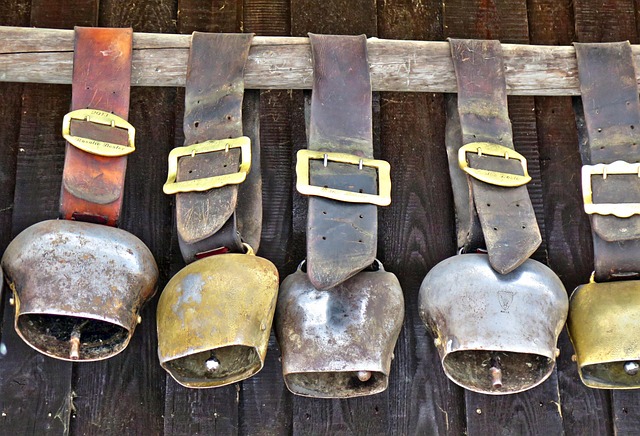
Cowbells go back surprisingly far but no, Switzerland neither invented the cows nor the bells. It just happens that Switzerland is the country that turned them into a cultural icon complete with laws, disputes and questions about traditions.
In Switzerland specifically, cowbells have been a part of Swiss Alpine farming for several centuries. The bells cast in bronze gradually moved from churches and ceremonies onto cows’ necks from the 18th century onward. They became widespread around 1820.
So Switzerland did not ‘invent’ the cowbell. But they did refine, ritualize and, like good chocolate, perfected it. Nowhere else have cowbells become such a cliché of national identity. You can see them plastered on chocolate boxes, posters and even fan sections at ski races and ice hockey games.
At Swiss‑style wrestling (Schwingen), champions sometimes walk away with a cowbell as well as a cow, as a prize. That’s a nice change from the American trophy culture. There is no engraved plaque, just ‘here’s a bell; may your victories be loud.’
Weight on the Neck, Not Just on the Ears
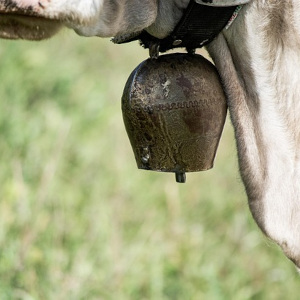
A typical Swiss cowbell weighs-in between 3 and 7 kilograms. So a big Swiss cowbell can weigh about as much as a bowling ball. The difference being the one rings on purpose while the other one produces a noise similar to a scream, when accidently dropped on someone’s foot.
An average American cow is likely to have a tag clipped on their ear and a brand. In Switzerland cowbells are considered part of the animal’s ‘working gear’. I guess you could say that a Swiss cow strolls about with a ‘heavy‑metal band’ hanging around its neck.
So we’re talking about a serious piece of neck jewelry accompanied by a good deal of noise.
From Pasture to Paperwork

Swiss breeders once used the bell’s sound to tell one cow from another in fog‑filled valleys. Each bell had a slightly different pitch like a furry, smelly ringtone. ‘Is that Bella I hear calling?’
Today, farmers might still identify their cows by sound. But the law often recognizes it as ‘noise,’ not ‘ambience’. So much so that Swiss noise laws have long said that bells can’t ring in residential areas at night. And with that they are targeting the cowbells. So a farmer can’t just shrug and say, ‘It’s the traditional sound of the Alps.’
In American small towns you might hear stray coyotes, lawnmowers, or a distant tractor. Swiss residential areas might produce those same sounds, well, minus the coyote, and plus a legal case. Jeez, Switzerland doesn’t have just one or two noise laws. It has more like a padded noise rule-book. So, do those cow’s nightly jingle count as a disturbance?
It’s Un‘bell‘ievable, but True
In the spring of 2023 two couples complained about the deafening cowbell noise in Aarwangen, a Swiss village. They were newcomers living at the very edge of a residential area. Their up close and personal view of the surrounding fields and pastures was as expansive as magnificent.
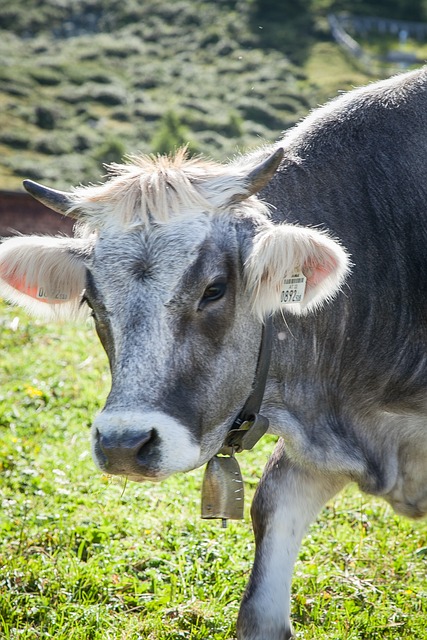
As is often the case in small villages, people talk. The town was split; some saw the cowbells as noise, others as the continuation of a Swiss tradition. But what to do? The community decided the only fair solution was… a referendum.
Swiss love to vote and a referendum is where the voters decide on a law or policy. This referendum wasn’t about the complaint specifically. But it was a general ordinance that protects cow, sheep and goat bells as part of the village’s tradition. It also allowed noise complaints to be assessed case by case.
The result: Aarwangen rewrote its rules stating that cowbell ringing is part of its historical identity. As a compromise (ah, so Swiss) it included a new system to balance tradition and quiet-time needs.
As a consequence the complaint was withdrawn. One of the two couples also moved away from the village while the cows and bells stayed. Turns out the real noise problem was the clash between city comfort and pasture reality.
The Swiss Solution

Over time, some Swiss farmers have tried quieter bells, softer clappers, or even “mute‑bell” prototypes. And, of course there’s a Swiss engineering team working on the sound‑dampened cowbell.
You could say Switzerland turned a simple pastoral tradition into an active discussion. There’s the animal welfare, cultural heritage, and noise law. And, naturally the eternal question of whether a cow really needs 5 kg of bronze on its neck just to be found in the fog.
 -
 -