
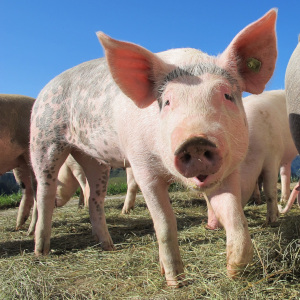
If I say “meat” you think of food, maybe a hamburger or a pork chop. If I say “animal” you might think of a cute little bunny or a white-tailed deer like Bambi. That is the way it is in English, meat is what you eat and animals are living beings.
I was watching a rerun of The Saint once a couple of weeks ago. Simon Templar (played by Sir Roger Moore) made the following comment when sheep were blocking a road. “You had better move or you will be mutton”. He would have raised some eyebrows if he had said “You had better move or you will be sheep.” Say what?
The Origins
Here are some examples of what I mean when talking about meat or animals in English.
Beef is the meat and cows graze in a pasture
pork is the meat and pigs live in pigsties
ham is pork from a leg cut and pig legs are what pigs use to walk with
veal is the meat of a calf which is a young male or female cow
mutton is the meat of domestic sheep
Why the difference? Why the euphemism? Where do the English words come from? It is said that way back when, the Anglo-Saxon farmers called the meat by the animal names. A cow was a cow and not a beef. Ah, but only the wealthy could afford to eat meat. Those were nobles and aristocrats who spoke Norman French to preserve their class distinction. Thusly, the people who cooked the food used the Norman French names. Otherwise how would the noble know what they were eating? After time the French words were anglicized. I guess everything sounds more noble in French.
boeuf became beef
porc became pork
jambon became ham-bone (shortened to ham)
veau became veal
mouton became mutton
German
Not so long ago the wealthy or wannabes in Berne distinguished themselves from the commoners by speaking French. Or when not speaking French, they spoke Swiss German with a French accent. Many French words have found their way into Bernese but there is no distinction between meat and animals.
The English disconnection doesn’t turn a cute animal into something on your dinner plate. Which is why the translation of the words might give an English speaker goose bumps.
beef translates into German as cow or cow meat
pork translates into German as pig or pig meat
ham translates into German as thigh
veal translates German as into calf or calf meat
mutton translates into German as sheep or sheep meat
As you can see, the word “meat” is often added to the animal to narrow down what is being talked about. Did you know the German word for flesh and meat is the same? So, you would say that a person is made of “meat and blood”. Yum.
It’s good to know the distinction in German and English. Still, in German you might want to use context to help you know what the speaker is talking about. Teeth meat [gums in English] is certainly not something you would normally expect to find on your plate.
Once I was talking to a polish woman in English. She told me that her boyfriend dealt with flesh. Think, think. What was she talking about? All the while she was pointing to her arm to emphasize what she meant. I was envisioning all sorts of weird things. It took awhile but I figured out he was a butcher. Context to the rescue.
 -
- -
-