
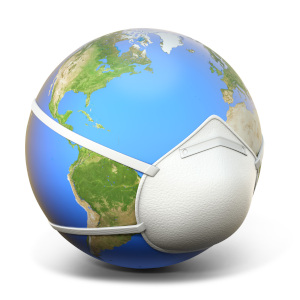
I apologize in advance. At the moment all you hear on the news is Corona, Corona, Corona. Still, there is no better time to take a look at a past influenza pandemic than now. What exactly happened about 100 years ago?
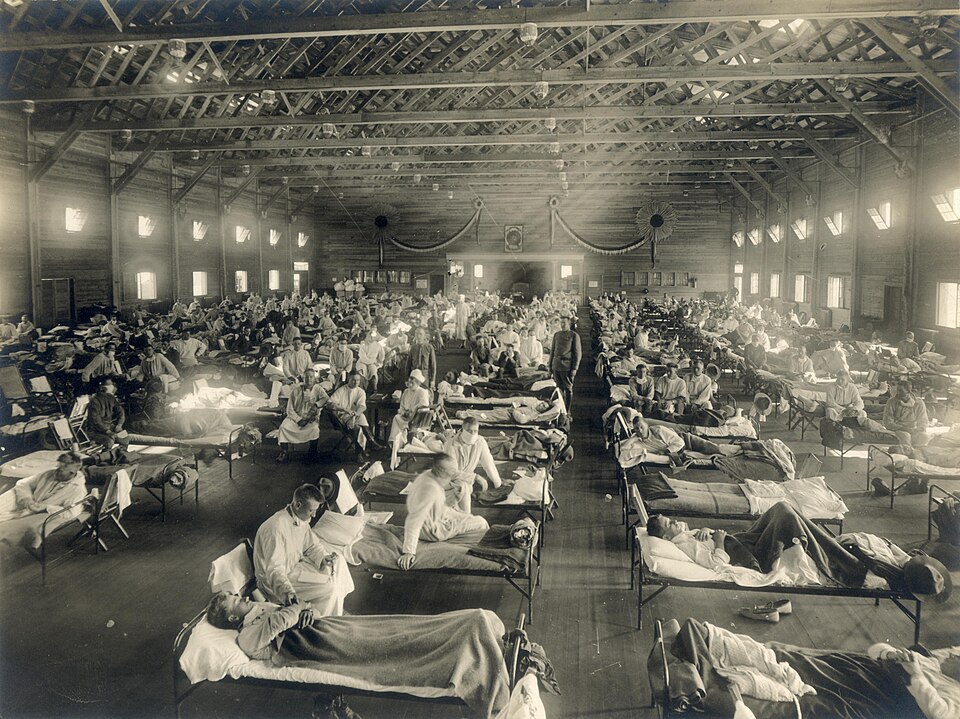
Well, from January 1918 until December 1920 an unusually deadly influenza was circulating the globe. It was the first involving the H1N1 virus and infected around 200 million people world-wide. That was more than a quarter of the world population at the time. Somewhere between 17 and 100 million people didn’t make it. Although it’s impossible to know exactly how many people died. Young adults were hit the hardest; about half the deaths were among 20 to 40 year olds.
Technically it’s called the 1918 flu pandemic, colloquially it’s known as the Spanish flu. That’s because news censors were in place to keep up the wartime morale. Newspapers were not allowed to report about warzones, they were, however, allowed to report on neutral places, like Spain. King Alfonso XIII’s grave illness from the flu and his subsequent recovery were therefore reported to the world. Because of the censorship the reports of the ravaging flu in other countries were greatly downplayed. This gave the impression that Spain was the most affected area.
Particularly Deadly
Was the virus particularly deadly? Some analyses say that it triggered an overreaction of the body’s immune system called a “cytokine storm”. The fact that it killed mostly healthy, younger people suggests the stronger the immune system, the stronger the overreaction.
Others say that it was no more aggressive than other influenza strains. They say that malnourishment, overcrowded medical camps and hospitals along with poor hygiene gave rise to a second bacterial infection. This second infection is what killed most of the victims. It is said that the disease killed more than 2.5% of those infected. A usual flu epidemic usually only takes about 0.1% lives.
Life Came to a Halt
With so many ill, of course everyday life was effected. Efforts to slow or end the pandemic consisted of communities closing all stores making it difficult to get food.
The virus effected everyone, many ill healthcare workers were not able to work. The sick got sicker and died. Because cremation was an uncommon practice at the time, the sheer number of bodies was overwhelming. Gravediggers and undertakers had a tough time keeping up pace with burying the dead. Mass graves were dug by steam shovel in many places. There was also a prohibition on public gatherings that included funerals and wakes which compounded the pain for many families.
Waves
There were three waves. The first wave of the pandemic was similar to a typical flu epidemic, effecting sick and elderly. Normally a second wave is milder but this one hit harder with death coming quickly, often two days after the first indication. This second, harder wave is attributed in part to the First World War. While the mildly sick soldiers stayed where they were the sickest travelled. They travelled in crowded trains to crowded, poorly ventilated hospitals spreading the virus. The third wave was worse than the first but not as bad as the second.
Let the Sun Shine in
Eventually the pandemic ended. There are many explanations for this. It could be that the virus had just run its course. But the fact that the doctors had gotten better at preventing and treating the second, bacterial pneumonia that developed certainly didn’t hurt.
Another reason for the end could be the makeshift hospitals. Because of the massive number of sick people they needed to be built quickly. Often the patients were set outside their small rooms in the fresh air. It’s called open-air therapy. A combination of fresh air and sunlight seemed to prevent deaths among patients. Fresh air is a disinfectant and apparently can kill the flu virus and other harmful germs and bacteria. Also, sunlight is germicidal. Add a good dose of vitamin D that you get from sunshine, which is linked to lowering respiratory infections and you’ve got a winning combination.
Silver Lining
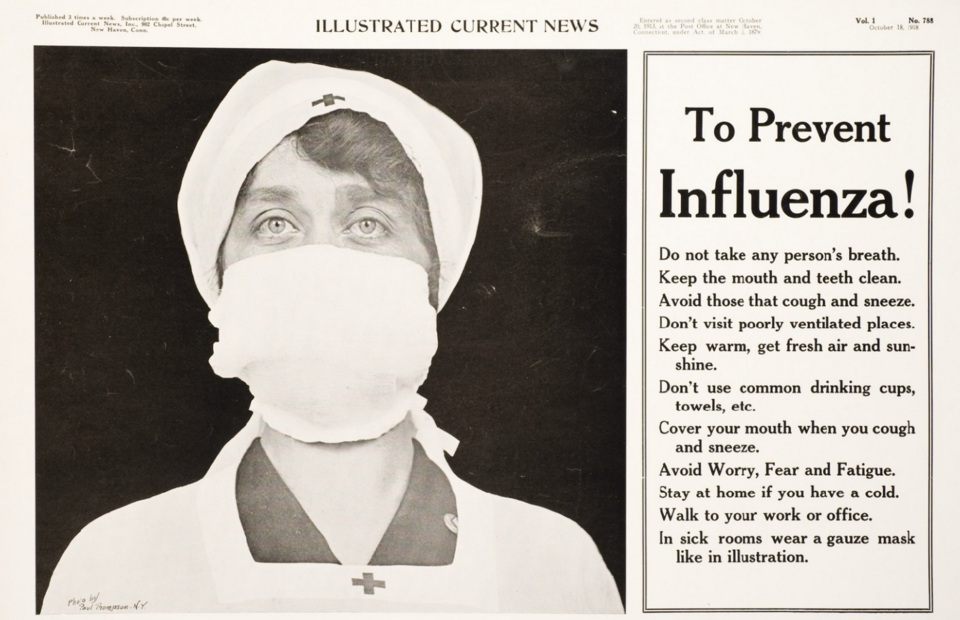
There has to be one, you just have to look hard enough. In an effort to stop the influenza virus from spreading, face masks were used. Of course they were in short demand so often they were improvised. Layers of gauze was fitted to a wire frame. These turned out to be the forerunner of the N95 respirators used today to protect medical staff against airborne infection.
Most probably the virus influenced the course of the First World War. The viral waves hit Germany, Austria-Hungary the Ottoman Empire and Bulgaria before hitting the Allied powers. Because the Central Powers were hit harder they grew substantially weaker.
The Takeaway
Quite often looking at history can help in the present. Even though the Coronavirus is not an H1N1 virus I’m sure there are parallels. It is closely related to the SARS (severe acute respiratory syndrome) CoV-2 virus. The SARS outbreak in 2002 infected over 8’000 people and killed at least 774. The Coronavirus has topped those numbers.
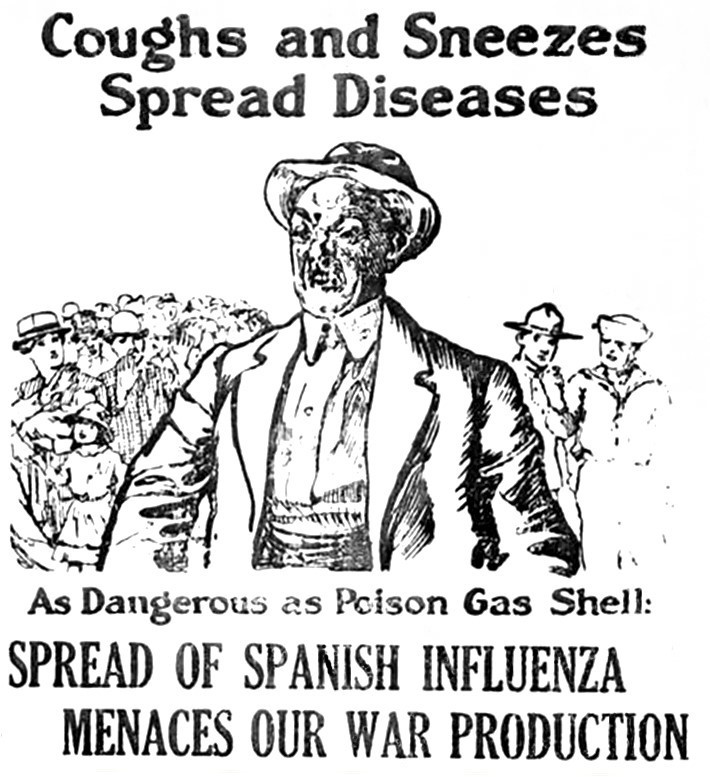
It is a new virus strain and as in 1918 there is no current cure. Similar to 1918, prevention in 2020 includes among other things, washing your hands. Avoid touching your eyes, nose or mouth with unwashed hands. Cough or sneeze into a tissue. For those who have already contracted the disease, wearing a surgical mask to prevent further infecting others. Social distancing along with restricted travel is recommended and politically enforced. Many countries are practicing a lock-down to try and slow the rate of infections to flatten the infection curve. This way the medical institutions have enough resources to care for the sickest.
Being in the high-risk group I’m personally doing everything I can to avoid catching this virus. In addition to practicing good hygiene and social distancing I’m hoping for lots of warm, sunny days. It seems like catching rays and adding a bunch of vitamin D might do my system good.
Stay safe everyone.
 -
- -
-