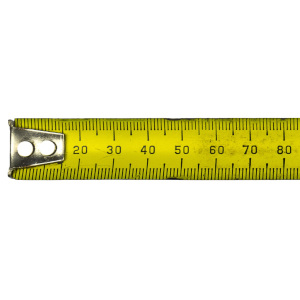
Measuring differs depending on where you are. In America distance is all about miles, yards, feet and inches. In Switzerland it’s about kilometers, meters, centimeters and millimeters. Cooking measurements differ as well. Gallons, quarts, cups, teaspoons and tablespoons verses liters, deciliters milliliters, coffee spoons and soup spoons. Temperatures are either in Fahrenheit or Celsius. What do I use and what do I “think in”? Well, it depends.
Actually I usually go about it the way I went about learning the language. I very seldom translate. I don’t think what I want to say in English first, then translate and spit it out in Swiss German. When speaking English I think in English, the same goes with Swiss German. This also applies to measuring things, I use whatever is called for.
Temperatures
I played on our college tennis team. We trained outside. I remember practicing when it was 50°F and thinking “this is cool, but doable.” For some reason around that time I also found out that 50°F is 10°C. I also knew that 70°F is pleasant, 80°F is warm and 90°F is hot. If it gets over 100°F you don’t necessarily want to stay outside for any extended amount of time. Unless, of course, you are frying eggs on the hood of your car. Planes don’t take off when the temperature reaches 118°F. Now that’s hot.
For converting I knew that -32°F is 0°C, both are freezing points. Okay, nothing special, everyone knows that. That and my 10°C knowledge was all I had when I came to Switzerland. After awhile I knew that 22 or 23°C in the car is comfortable/warm. When the thermometer hit 30°C we were talking very warm and time to put the chocolate into the refrigerator. Anything above 35°C Switzerland comes to a halting stop; ridiculously hot. No one ever talks about it getting so hot in Switzerland that planes can’t take off. So it doesn’t get that hot here. If you actually calculate Celsius into Fahrenheit you will see that for me “comfortable/warm” in Switzerland is around 73°F. “Very warm” is 86°F and “ridiculously hot” is only 95°F. I’ve said it before, Switzerland has a milder climate.
Length and Distances
Parallel to temperatures I do not calculate lengths from one system to the other either. I know that I am 5’7” and 172cm. When talking about someone’s height, depending on what they say, they are either taller than me or not.
Calculating distances is really my weak spot. How far is it from our house to our neighbor’s house? I am clueless in any measurement system. Clueless. How far is it from here to Zurich? Well, I certainly wouldn’t want to walk it, that’s for sure. I seem to measure distances in time. It takes about 1 3/4¾ hours to drive there. That works for me in miles and kilometers.
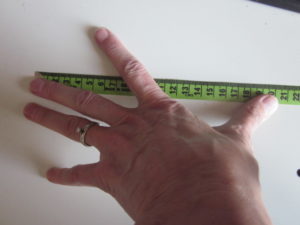
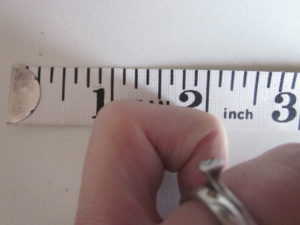 There are three measurements that I know about how long they are, unfortunately they only occasionally come in handy. One is how much an inch is. That is the length of my little finger from my middle knuckle to the knuckle towards the fingertip. 20 cm is the span between my middle finger to my thumb. A meter is the distance from my middle finger on my outstretched arm to my opposite shoulder.
Cooking
This is easy. If I’m using a recipe that uses American measurements I pull out my cups and spoons set. If it is a Swiss recipe then I use the measurements that are called for there. The nice thing about that is I’ve got a measuring cup that measures cups on one side and deciliters on the other. Because of that I know that 2 cups pretty much equals about 5dl (1/2 liter).
I do, however have a conversion table in my English cookbook from kilos to pounds. I use it when I’m buying and cooking turkey. Turkey sizes can really have a big effect on the length of time needed to cook the bird. We’re talking hours and not minutes here. Something you really need to know if you’re having guests over for, say, Thanksgiving. Something you don’t want to say when hungry guests arrive is “The turkey has another 3 hours”. Luckily, thanks to my conversion table, I have never had to say that.
 -
- -
-