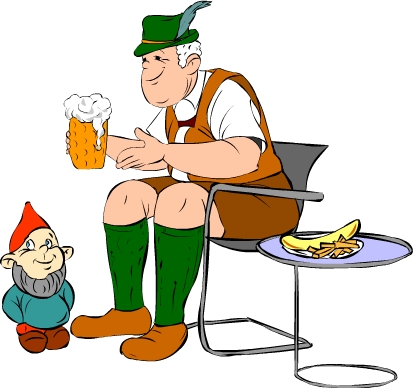
What makes a Swiss, Swiss? It can get pretty blurry if you’ve never been here. The non-knowing usually end up with the wrong perception. Typically it is a picture of someone wearing leather shorts, a green hat and drinking beer. Ouch. Wrong country.
Still, that doesn’t have to be completely incorrect. Part of Switzerland is Germanic and shares many traditions with the Germans and Austrians but there are differences. And there are some things that are just SO Swiss. This is the second part of my personal, general, non-infinite list of what makes Swiss, Swiss.
Betty Bossi
I wrote a post in 2017 about food and Betty Bossi.
I’m pretty sure that every Swiss has heard of Betty Bossi. Probably most have at least one of her cook books. Betty Bossi ‘was born’ around 1956, but she knows how to keep up with the times. Her recipes reflect what the people want. Do you want to be fit and thin? Betty Bossi will show you the way. Do you need low fat recipes? Low carb? Does it have to be fast? Festive? Diabetic recipes needed? Betty has the answer. She also sells gadgets galore that make cooking easier. Betty is like a good Swiss friend, there when you need her. I’ve lost count of all the times I’ve asked someone for a recipe for something they made. Their answers were ‘Betty Bossi’ more times than not.
Rösti
Speaking of food, ‘rösti’ is typically Swiss. And, yes, Betty Bossi will tell you how to make it, if you don’t know. The side dish originated in the Canton of Berne as a breakfast. They like to think it is something unique but it is basically hashed brown potatoes made into patties.
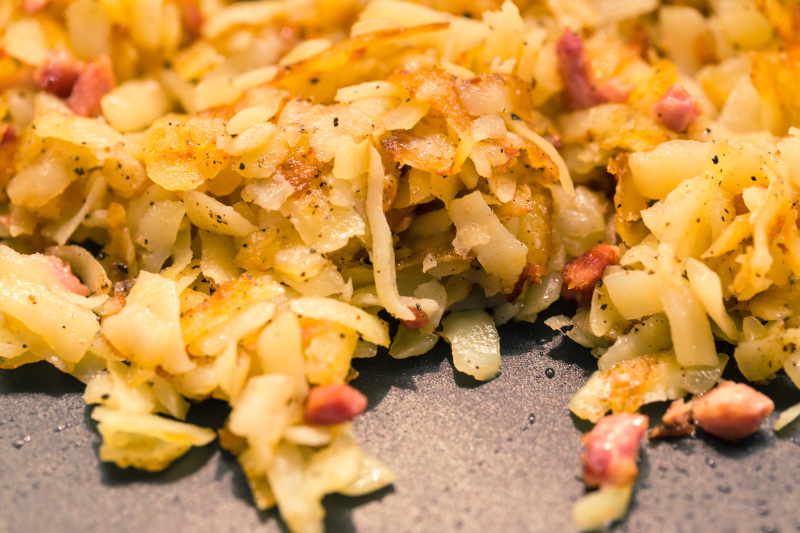
The first time Ben made rösti for me I made the mistake of thinking he was making hash browns. I thought they would burn and broke up the patty to get it nice and crusty. No, no, no! You don’t do that, you let it brown. After the grated potatoes are warm and browned a bit, you mash them down in the frying pan to form one big patty. It then forms a crust. The whole pie-like-patty potato is then flipped onto a plate, crust side up. Many restaurants specialize in rösti. Rösti with eggs, rösti with raclette, rösti with bacon, rösti with, well, rösti. If you want Rösti in a jiffy you can buy it packaged and pre-grated. Put it into the pan and you are good to go. If potatoes are your thing, this is for you.
Röstigraben
The Röstigraben isn’t quite as delicious. A ‘Graben’ is a ditch. The ‘ditch’ as it were, stretches from the Jura across Lake Biel across the alps to the Rhone valley. The ‘Röstigraben’ basically splits the French speaking part of Switzerland from the German speaking part.
I assume the term is used because the meal originated in the German speaking part. When the Swiss speak of the Röstigraben they are talking about social and foreign, political differences, not food. The French speaking people usually favor government regulation and active foreign policy, especially when it comes to the European Union. So, no, there is no ditch filled with crisply roasted potatoes that separates regions in Switzerland.
Interestingly enough, although I have never heard the term used, there is also something called the Polentagraben. Of course that would be a polenta ditch. Polenta is boiled cornmeal and is a staple food in northern Italian and Ticino (Swiss-Italian) cuisines. This would refer to the split between the Italian speaking part of Switzerland with the German speaking part.
So, I guess if you want to make a point, the easiest way is to make an analogy that everyone can relate to. That would be food.
1291 Switzerland in the Making
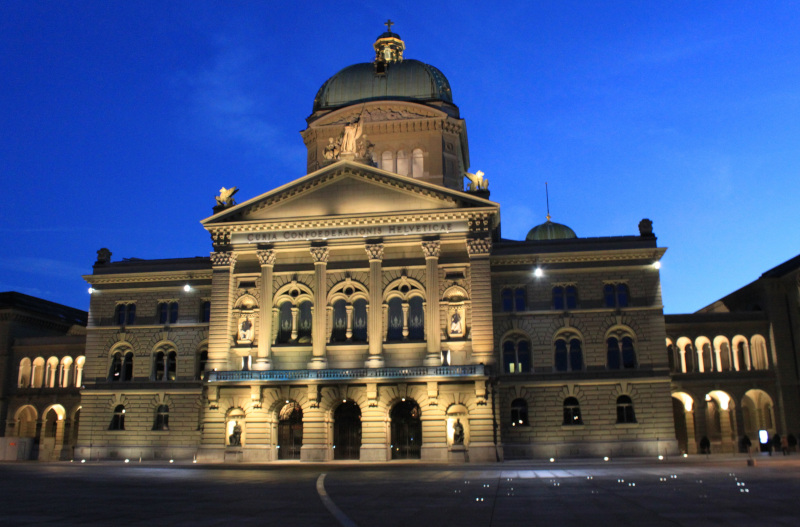
In America every school child knows what happened on July 4th, 1776. Every Swiss knows what happened many years earlier in Switzerland. On August 1st, 1291 the cantons of Uri, Schwyz and Unterwalden formed the Old Swiss Confederacy. The beginnings of Switzerland started on a small meadow above Lake Lucern called Rütli. There, legend has it that three representatives of three cantons swore an oath of alliance in freedom and liberty. The three men are known as founding fathers. They were Walter Fürst from Uri, Werner Stauffacher from Schwyz and Arnold von Melchtal from Unterwalden.
1891 Party-Time
Still, seldom are things quite as simple as they seem and August 1st, 1291 is one of them. As far as I know Switzerland didn’t celebrate an independence day until the end of the 19th century. The idea came in 1891 when the city of Berne wanted to throw a party for being 700 years old. I guess they thought if they were going to throw a party, they might as well do it right. They decided to combine it with 600 years Switzerland using the Federal Charter from 1291 as their fulcrum.

It seems there are at least 82 other documents between the years 1251 and 1386 that document similar pacts. Each could probably have been used as the birth date of Switzerland. Still, the one from 1291 seemed to fit the bill best for the Bernese festivities, so why not use it? As far as August 1st goes, the document says ‘in the beginning of August’. So not even the date is certain.
I believe the festivities were originally thought to be only a once every 100 year thing, but holidays are cool. I guess Switzerland missed celebrating an independence day so 8 years later, in 1899, the parliament made it official. From then on the Swiss national day was fixed. In some cantons you had to work, in others you got a half day off. Believe it or not, August 1st has only been a national, work-free holiday since 1994. After a 1993 federal initiative got the good to go. Now everyone has off on August 1st.
Direct Democracy
What could be more Swiss than the direct democracy? Politically, nothing. Everyone has a say in everything and can put in their 2 cents. Direct democracy empowers the general public. It also sends them voting every couple of months. Very, very Swiss.
Switzerland has been doing the direct democracy thing for a long time. They are experts at it. The words ‘Referendum’ and ‘Initiative’ are in every Swiss’ basic vocabulary. The referendum was incorporated into the Federal Constitution in 1874, the right to constitutional initiatives in 1891. They have been tweaking these rights ever since. Now you can vote on a proposal along with a counterproposal. And because that is so much fun, you also vote on which proposal you would prefer if both are adopted. Talk about compromise-oriented dialogue between the Swiss and their authorities. Wow.
Dj Bobo
Peter René Baumann is Switzerland’s best selling recording artist. His success is not only in Switzerland but in Germany and even Asia and South America.

He sings pop and has very elaborately staged theme concerts. In 2003 his upbeat earworm ‘Chihuahua’ made an international splash. I believe it even came with a choreographed dance. Listen, smile and if you remember the choreography, go for it.
Gerda Conzetti
This is rather dated. Gerda Conzetti was a primary school teacher turned TV moderator, turned TV-handicraft-queen. Her heyday was in the 1970’s and early 1980’s.
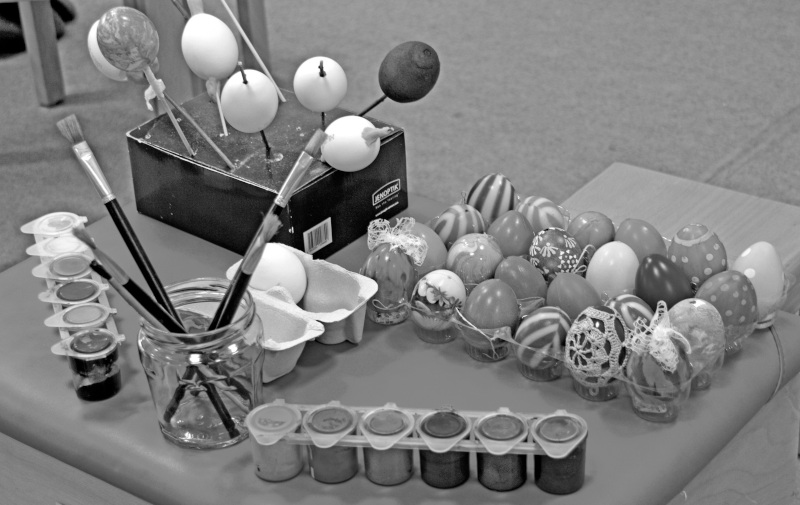
In comparison to children’s TV shows today, Gerda’s show was very quiet and almost meditative. She showed how to easily make useful things out of easy accessible material. At that time there were very few children’s show so almost every child between the ages 7 and 12 watched. A whole generation knew who Gerda was.
After I came to Switzerland I worked at a media center. I was in charge of making what was known as ‘Media packets’. I was given material for specific themes and had to create a presentable, useable package for schools. There was a lot of gluing and cutting going on. At some point someone who worked there called me the media center’s own Gerda Conzetti. I only understood what she meant after I asked my husband who she was. I also hope that was a compliment that she gave me.
 -
- -
-