Here is my next listing of animal idioms and sayings in German. The animal kingdom is well represented in many languages. I’ve noticed a lot of idioms, sayings and animal talk in the German and Swiss languages, both nice and not-so-nice. Here are some of the sayings that I’ve heard along with their English equivalent, if they have one.
This post is about wild animals. As Dorothy, in ‘The Wizard of Oz’ said: ‘Lions and tigers and bears, oh my!’ Unfortunately, I found no sayings about tigers, so we’ll have to do with lions, bears, elephants and monkeys, oh my!
Lion
Partylöwe. Direct translation: party lion.
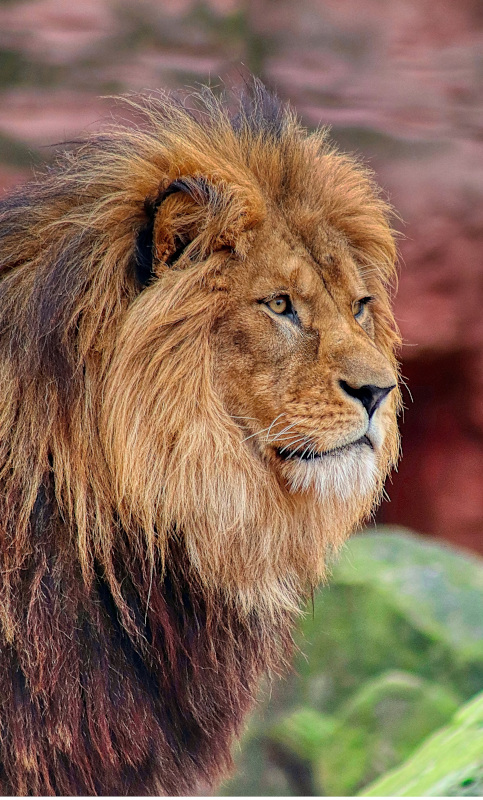
It seems a party lion is a man who puts a lot of value in how he comes across at parties. They also like to be surrounded by adoring women. The English word would be socialite and could be both a woman or a man. A woman could probably also be called an ‘It girl’, and then Paris Hilton comes to mind.
Löie. Direct translation: to lion.
This is one of the few Swiss terms that I don’t think is said in German. The word ‘Löi’ is a noun and it means a lion. When used as a verb it gets a whole different meaning. The English equivalent would be ‘chill’. So, if you are just ‘lioning’ around you wouldn’t be hunting, you would be doing nothing. I, like many others like to lion, in fact, I’m probably doing ‘lioning’ right now.
Sich in die Höhle des Löwen wagen. Direct translation: venture into the lion’s den.
This is a very visual expression and it is the same in English. Who knows what could happen in the den. You could get eaten, hmm, would that be home delivery for the lions? Or, the lions might just be ‘lioning’ around and not really care if you are there or not. Whichever the case, it is certainly going into the unknown.
Bears
Bärendienst. Direct translation: bear service.
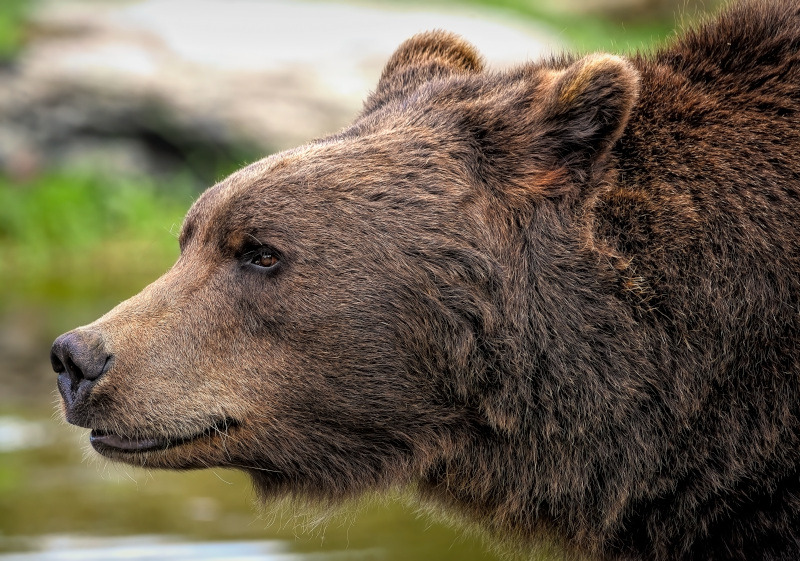
What is meant here is simply a disservice. Something that is done with good intentions but turns out badly. Quite possibly the term ‘bear service’ is derived from a fable by the French poet Jean de La Fontaine. In 1678 he published ‘L’ours et l’amateur des jardins’. The fable is about a man who befriended a bear. They got along together just fine. One day, while the man was sleeping in the garden a fly landed on his nose. The bear wanted to kill the fly so it wouldn’t disturb his friend. He took a large stone and threw it on the fly. The result was it not only killed the fly but also his friend. Ouch. Nothing worse than a dumb friend.
Bärenstark. Direct translation: bear strong.
In German bears are strong. In English you would be ‘strong as an ox’. But to be fair, you could very well say ‘Stark wie ein Stier’ in German which means ‘strong as a bull’. And an ox is a castrated bull, which is almost the same. Unless, of course, you happen to be an ox.
Bärenhunger. Direct translation: bear hungry.
How do bears get strong? They eat. So if you are as hungry as a bear you have some serious eating to do.
Jemandem einen Bären aufbinden. Direct translation: tie a bear to someone.
The meaning of the saying is to tell someone something untrue and hope they believe it. Tie a bear to them and hope they don’t notice it. The English equivalent would be to take someone for a ride or pull their leg.
Surprisingly enough, sometimes you can tie a bear to someone and they truly don’t notice it. I used to tell people I was related to Neil Armstrong, the first man on the moon. I knew a lot about him and could whip it out on command. Yes, Uncle Neil. Okay, maybe it was a little easy because my maiden name is ‘Armstrong’.
When Ben was in America someone asked him how the holes got into Swiss Cheese. Ben immediately thought this person was pulling his leg, everyone knows those are just air bubbles. Really, everyone. Ask a silly question, get a silly answer; he decided to play along with the joke. He said Swiss workers drill holes in the cheese. That way the unemployment quota is very low in Switzerland. The next day that person was steaming mad at Ben. It seems he had gone home and told everyone how the Swiss lowered their unemployment. No one believed him, they just laughed! Obviously, some people just don’t realize that a bear has been tied to them.
Elephants
Wie ein Elefant im Porzellanladen. Direct translation: like an elephant in a china shop.
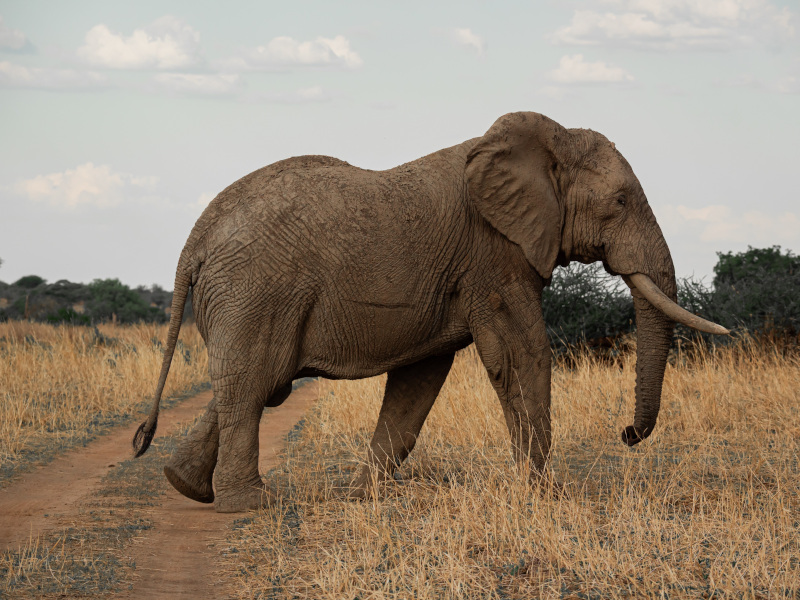
The direct translation is perfect. I guess no matter where you are in the world an elephant in a china shop is just not welcomed. Although I might add that not only elephants behave clumsy and recklessly in china shops. In English you could also say ‘like a bull in a china shop’ to mean the exact same thing.
Ein Gedächtnis wie ein Elefant haben. Direct translation: to have a memory like an elephant.
The English saying is more along the lines of ‘an elephant never forgets’. So if someone has a memory like an elephant, then he or she has a very good memory indeed.
Monkey
Wie ein Wald voll Affen. Direct translation: like a forest full of monkeys.
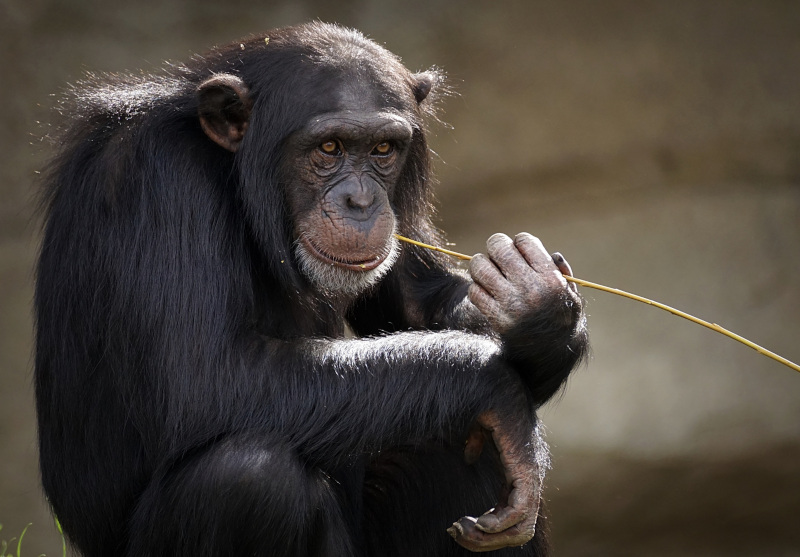
It’s pretty obvious when someone says this what they are talking about. Even if you have never been in or seen a forest full of monkeys, you can imagine it. Simply put, there is lots of commotion and noise. But, no. We don’t say that in English.
Nicht für einen Wald voll Affen. Direct translation: not for a forest full of monkeys.
Similar to the previous saying we are talking about a forest full of monkeys. But interestingly enough, if you say this you mean ‘under no circumstances’. ‘I wouldn’t do that for a forest full of monkeys.’
Just a hypothetical question here, what would you say if you wanted to say ‘sure, I’ll do that’? Would you say ‘sure, I’ll do that for a forest full of monkeys.’ Then, what in the world would you do with all those monkeys and the forest?
Affentheater. Direct translation: monkey theater.
I suppose the English counterpart would be monkey business. Basically we are talking about a charade, or nonsensical, silly, absurd behavior.
Wenn Affen steigen, wird das Wetter schön. Direct translation: when the monkeys climb, the weather is going to be nice.
Who would have thought? This little saying is very common. When someone is up on a ladder they might say something like ‘the weather’s going to be nice!’ Immediately everyone knows exactly what they are talking about; the monkeys are climbing again.
 -
- -
-