Speaking in German is like talking in picture books. I’ve said it before and I’ll say it again. Everything you say somehow brings up visuals. The animal kingdom is well represented in many languages. I’ve noticed a lot of idioms, sayings and animal talk in the Swiss languages, both nice and not-so-nice. Here are some German and Swiss sayings I’ve heard along with their English equivalent, if they have one. Interestingly, some animals are represented more than others.
The more I thought about it, the more phrases and sayings I came up with. In fact, so many that I have split this post up into smaller ones. This first one, in no particular order, is about animals in general, horses, zebras and donkeys.
Animals in General
Tierisch Kopfweh. Direct translation: animal headache.
I’m afraid saying you have an ‘animal-like headache’ in English would only get you strange looks. The more useful term in English would be ‘bestial headache’. Which, of course, I hope none of my posts will give you.
Gewohnheitstier. Direct translation: habitual animal.
In English you certainly wouldn’t call someone who does thing out of habit a ‘habitual animal’. You would say they were a ‘creature of habit’. That has such a nice ring to it.
Ausgeprägte Herdentrieb. Direct translation: explicit herd instinct.
Which means exactly what it says, a tendency towards social groupings and behaviors.
Horses
In both German and English there are a lot of phrases about horses. Some correspond directly, others have no equivalent.
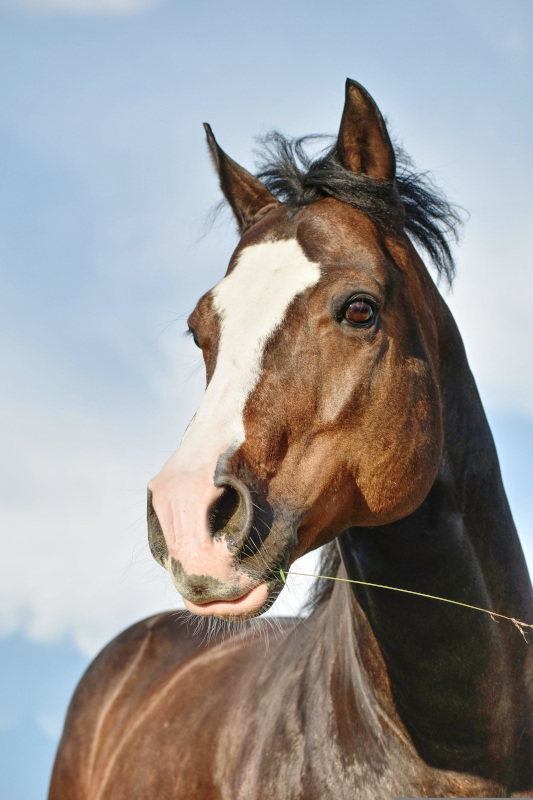
Auf dem hohen Pferd sitzen. Direct translation: sitting on the high horse.
The terminology ‘high horse’ has the same meaning in English: snobby. The exception being you would probably tell someone to ‘get off your high horse’ if they were being snobby.
Das hält ja kein Pferd aus. Direct translation: no horse can withstand that.
A horse can take a lot. If a horse can’t bear something then it’s pretty unbearable. Although it’s understandable, I’ve never heard anything similar used in English.
Aufs falsche Pferd setzen. Direct translation: put (your money) on the wrong horse.
I guess betting on horses happens everywhere. That’s what’s meant here; betting on the wrong horse. In English you would probably say ‘backing the wrong horse’. But the wrong horse is the wrong horse in any language. It simply means you misjudged something.
Frisst kein Heu. Direct translation: doesn’t eat hay.
What doesn’t eat hay, doesn’t generate any extra costs. Ben’s mother was known to say this when she put something away in the attic never to be used or seen again. But she was right, it didn’t eat any hay.
Mit jemandem Pferde stehlen können. Direct translation: to steal horses with someone.
No, this has nothing to do with really stealing horses. In English it would is similar to saying ‘partners in crime’. And, believe it or not, it’s a compliment when someone say they could steal horses with you. When my husband said that to me I had to hold back asking ‘what in the world do we want with horses?’ Of course, if we had done that we would have been partners in crime.
Workhorses, Ponies and Zebras
Das leben ist kein Ponyhof. Direct translation: life is no pony farm.
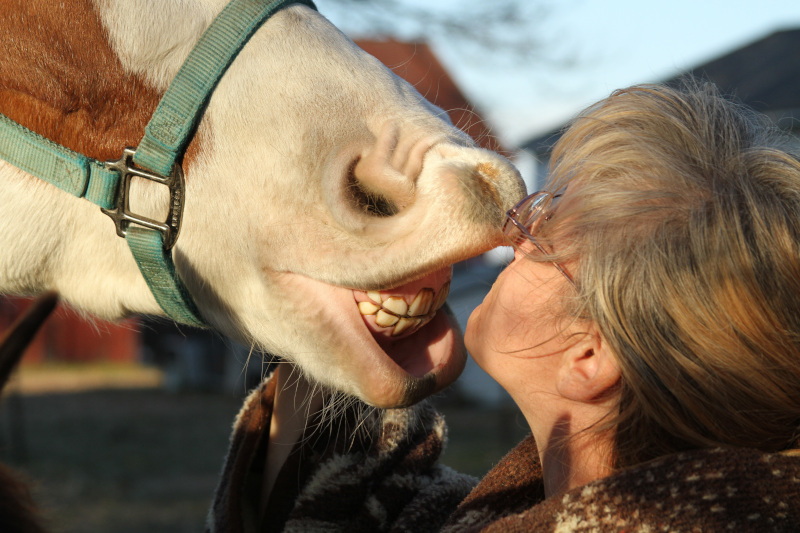
This basically means that life isn’t always easy. I guess life on a pony farm is.
Einem geschenkte Gaul schaut man nicht ins Maul. Direct translation: one doesn’t look into the mouth of a gift nag.
This is pretty much the same in English: don’t look a gift horse in the mouth. Meaning don’t question the value of a gift. This proverb refers to evaluating the age and health of a horse by looking at its teeth.
Zebrastreifen. Direct translation: zebra stripes.
The English terminology I would use is a ‘pedestrian crossing’. I believe the expression ‘zebra crossing’ exists, but I would be careful where and with whom I used it. In other countries pedestrian crossings don’t always have stripes on them. Honestly, if you hear ‘zebra crossing’ and had never seen one, it conjures up a rather interesting visual. Then again, if you have seen one then you know what is being talked about.
Donkeys
Der Gescheitere gibt nach, der Esel bleibt stehen. Direct translation: the smarter one gives in, the jackass stands his ground.
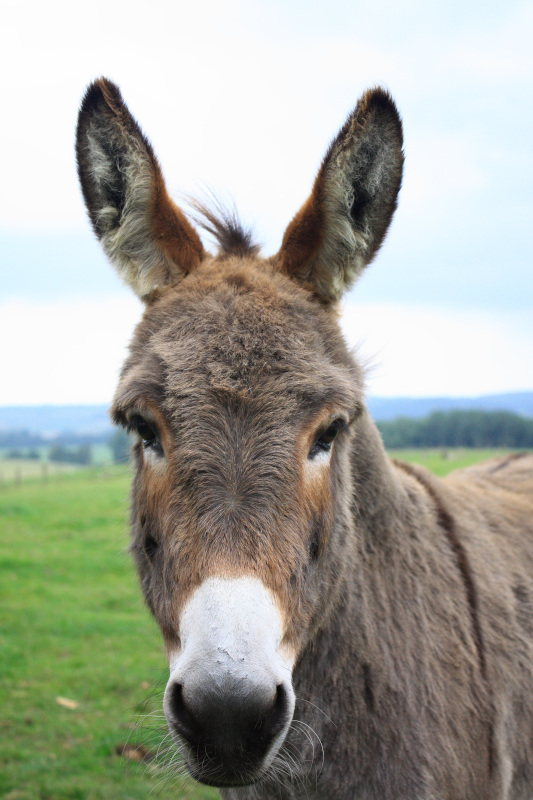
How true. I know of no other cute little rhyme that is similar in English.
Stur wie ein Esel. Direct translation: stubborn like a donkey.
Another perfect translation because I guess donkeys are stubborn all around the world.
Eselsbrücke. Direct translation: Jackass or donkey bridge.
The word ‘Eselsbrücke’ is so much more visual than the English word ‘mnemonic’. Although it means the same and is fun to write, it’s still difficult to remember. It’s just an associative way of remembering things, it can be with words, pictures or objects.
For example, how many days are in the month of March? Use your knuckles to find out.
Every Swiss 4th grader can whip out the names of the planets of our sun system in the right order. They use the first letter from the following sentence: Mein Vater erklärt mir jeden Sonntag unseren Nachthimmel. [My father tells me every Sunday our heaven.] Which gives you: Mercury, Venus, Earth, Mars, Jupiter, Saturn, Uranus and Neptune. The sentence used to include Pluto ‘our nine planets’ [unsere neun Planeten’]. But since 2006 it is no longer considered a planet so the mnemonic has been changed.
Wenn es dem Esel zu wohl wird, geht er aufs Eis tanzen. Direct translation: when the donkey is feeling too well, he goes dancing on the ice.
Donkeys aren’t known to be too smart. Doing something in high spirits can harm you. This saying is used quite often in German. Interestingly enough, when someone does something they should have known better not to do, one might just shake their head and say ‘when the donkey…’. Just say those three words and immediately everyone thinks the rest of the idiom to the end.
 -
- -
-