

Now that 2020 is finally behind us, there’s little doubt what most of the world will remember it for. No, I’m not talking about the US presidential election, I’m talking about COVID-19. It’s dominated 2020. I’ve even indirectly written about it several times this past year: A Point in Time – The Spanish Flu – 1918, and A Point in Time – 1857 – Toilet Paper. I’ve also looked at television news broadcasts, the handshake and, of course, social distancing to name a few.
Did you know that every year one organization or another chooses their ‘Word of the Year’? It’s usually a word that somehow defines the year.
Collins English Dictionary Word of the Year, 2020
Collins chooses their word early November. I asked my husband to guess what it was. After guessing ‘COVID’ and then ‘pandemic’ he nailed it on his third try.
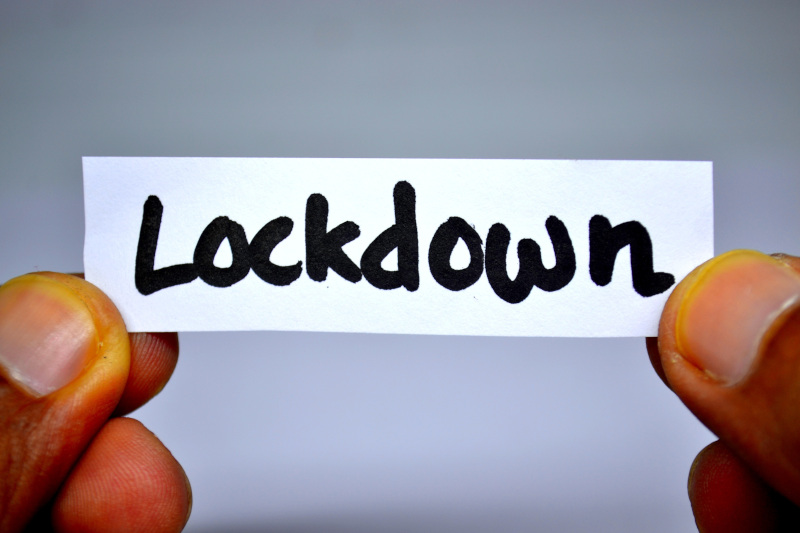
‘Lockdown’! After announcing it Collins wrote ‘Our lexicographers chose ‘lockdown’ as Word of the Year because it is a unifying experience for billions of people across the world, who have had, collectively, to play their part in combating the spread of COVID-19.’
They continued by saying ‘It’s not a shock to remember that lockdown was originally a piece of prison vocabulary: it’s when inmates are confined to their cells because of some disturbance on the wing. 2020 is the year that the meaning of the word shifted irrevocably: in most people’s minds, lockdown is now a public health measure — its use having increased exponentially since 2019.” They also noted that they have registered over a quarter of a million usages of ‘lockdown’ during 2020, up from only 4,000 the previous year.
Since the begin of the pandemic virtually every major country has enacted some form of a lockdown to try to keep the virus from spreading. Most limiting human interaction and unprecedented social restrictions. Which, in turn, has many people inflamed at being told what they may or may not do.
‘Lockdown’ won out over a list of pandemic influenced words that Collins considered. ‘Coronavirus,’ ‘key worker,’ and ‘social distancing’ were on the shortlist along with ‘furlough.’ Also on the shortlist of words they considered were ‘BLM,’ an abbreviation for the Black Lives Matter and ‘Megxit’ which surprised me. I had never heard ‘Megxit’ used before. It seems like the British were occupied with Prince Harry and Meghan’s exit from the British royal family. You’ve got to remember that Collins is British, published in Glasgow.
Oxford Dictionary Word of the Year
Casper Grathwohl, the president of Oxford Dictionaries, told The BBC: ”It’s both unprecedented and a little ironic – in a year that left us speechless, 2020 has been filled with new words unlike any other.’

Their report said: ‘Of course, Covid-19 and all its related vocabulary provided a clear focus for our language monitoring this year but there were many other areas of activity which saw enormous language change and were equally demanding of our attention, such as political and economic volatility, social activism, the environment and the rapid uptake of new technologies and behaviors to support remote working and living.
‘Though what was genuinely unprecedented this year was the hyper-speed at which the English-speaking world amassed a new collective vocabulary relating to the coronavirus, and how quickly it became, in many instances, a core part of the language,’
‘All of which goes to illustrate that 2020 is a year which cannot be neatly accommodated in one single ‘word of the year’.’
Oxford Word of the Year basically ended up being Words of the Month.
January: bushfire due to Australia suffered their worst fires in their history.
February: acquittal after president Trump’s impeachment trial ended.
March, April, May: Covid-19, lockdown, social distancing
June, July: Black Lives Matter, cancel culture
August, September: mail-in, Belarusian
October: Moonshot, the name UK gave their Covid testing program
November, December: superspreader, which stems from a cluster of Covid-19 cases at an event at the White House. net zero, which refers to Chinese President Xi Jinping’s pledge that the country will be carbon neutral by 2060.
Other Words of the Year
What Collins and Oxford can do, others can do, too. Langenscheidt, publishes and translates German into many different languages. They published the 2020 Youth Word of the Year. Believe it or not, it has nothing to do with the pandemic, or not directly at any rate. It is ‘lost’. And yes, this is an English word used by the German speaking youth. The word means the same as in English. A German sentence might be something like this: ‘Ich bin total lost’ [I am totally lost]. Also on their shortlist of words for the year 2020 were two other English words: ‘cringe’ and ‘wild’ also spelled ‘wyld’. Which takes us very neatly to the next category ‘Anglicism of the Year’.
Anglicism of the Year
A German word that stems wholly or partly from English has been chosen every year since 2010. The 2020 word of the Year has yet to be chosen, but looking at some of the previous winners, I saw the chosen word reflected what was going on in the world that year. These are the chosen words that I’ve heard used in Switzerland.
In 2010 ‘Shitstorm’ was chosen and means a huge mess or farce of epic proportions. The German speakers use it more in the sense of indignation, anger or outrage in the Internet and social media.
2012 was ‘Crowdfunding’ which is a way to gather money (for projects or whatever) by getting people to pledge a small amount of money through the Internet.
2014 was interesting because I have never heard the first or second place words used in Switzerland: ‘Blackfacing’ and ‘Big Data’. Third place caught my attention, though: ‘Selfie’.
In 2016, the year Donald J. Trump was elected US president, the Anglicism of the Year was ‘Fake news’. That word is now imbedded into not only the English language but also the German language.
2017 was the year of the ‘Influencer’. These are people online, usually on Youtube, who exercise influence over a large, usually younger population. Quite often they make big money doing placement advertising that their many followers see.
Last year, 2019, was ‘[…] for future’. It originated with the climate activists Fridays for Future. Because it was so catchy other movements used it too:. You can fill in the ‘…’ with whatever fits your fancy: Students for Future, New Year’s Eve for future, Vacations for future, you get the idea.
Swiss Word of the Year
The Swiss Word of the Year was crowned on December 8. There’s always a first place winner, second place and third place for each of the 4 official languages. That makes 12 words of the year for Switzerland.
The winner words are, more times than not, are connected to a specific Swiss event. Occasionally an Anglicism will slip in. I wrote about anglicisms in the Swiss language back in 2018. Swiss love to use Anglicisms although they very often mean something completely different than their English counterpart. One of the first times I heard something like this I was baffled. Someone called our dog a ‘loser’. Even though our dog wasn’t a loser, I didn’t say anything. I understood quickly and intuitively through context that being a loser was something positive. After all, who plays with a dog and scratches its ears, smiles and says ‘You loser, you’?

I mentioned the huge discrepancy in the definition of the word to my husband and he laughed. He said although the word sounds exactly the same in English and Swiss it’s spelt differently: ‘Luuser’. It is derived from the word ‘Lusbueb’ [lice boy]. Historically lice did play a role in the definition and was accompanied with a negative connotation. Luckily, for our dog, it has evolved and is now an affectionate title and means something like ‘little rascal’.
My personal choice for the 2020 Swiss Word of the Year to be ‘luuser’ also spelt ‘loser’. That way it would include everyone, people who are little rascal kind of, good ‘losers’ along with the bad losers of the world. You can put either a negative or a positive twist to it.
The Swiss Word of the Year 2020 was … Hmm, does that make me a ‘Luuser’ or a ‘loser’?
 -
- -
-