
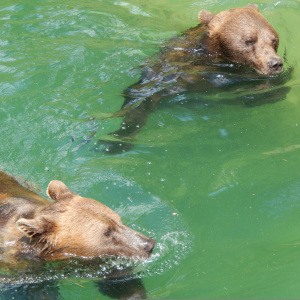
Bears are unquestionably an integral part of the city and have been since the founding of Berne in 1191. After all, Berne means bear.
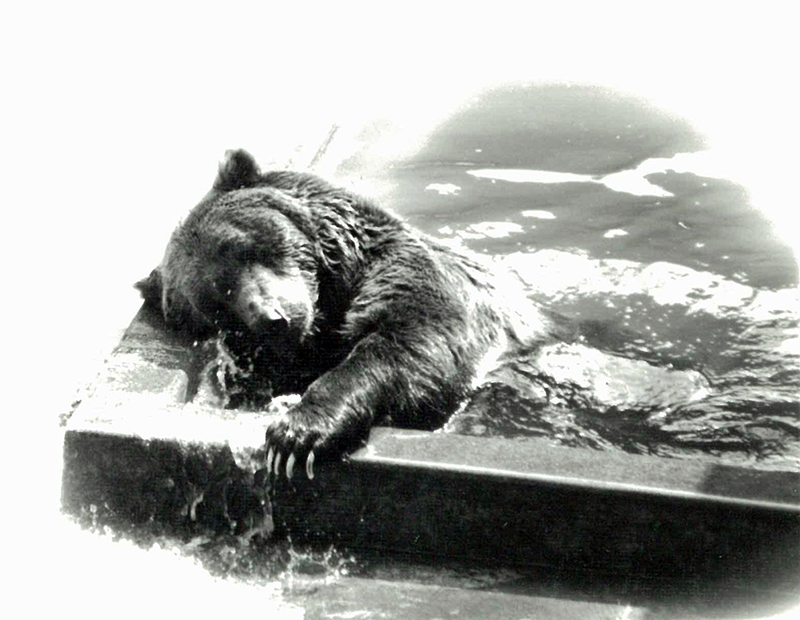
How Berne got its name is what legends are made of. One of the less exciting etymologies for Berne was it was named after the city of Verona in Italy. Which, at that time, was known as Bern. Berne was known at that time as ‘Bern im Uechtland’. Uechtland is a region in Switzerland so presumably it was used to distinguish it from the city in Italy. Another non-spectacular possible origin of the city’s name came into being after a zinc tablet was found by amateurs in the 1980s. Its inscription, consisting of four words, is apparently in Gaulish. Somehow from these four words it’s now assumed that Berne was named after a geographical cleft.
Duke Berthold V of Zähringen
Another, much more popular etymology for Berne revolves around the founder, Duke Berthold V of Zähringen. It is said that although the Duke had good political skills, his imagination wasn’t his strongest point. He founded the town and didn’t know what to name it. So he threw a feast and invited regional nobles to help him find a suitable name. Although the party lasted three days, neither he nor the guests came up with a suitable name during that time. Someone had the idea that they could go hunting and they would name the town after the first animal they killed. A bit of a tricky venture, imagine what Berne would be called if they killed a wild boar or a rabbit first. Still, everyone agreed that was what they would do.
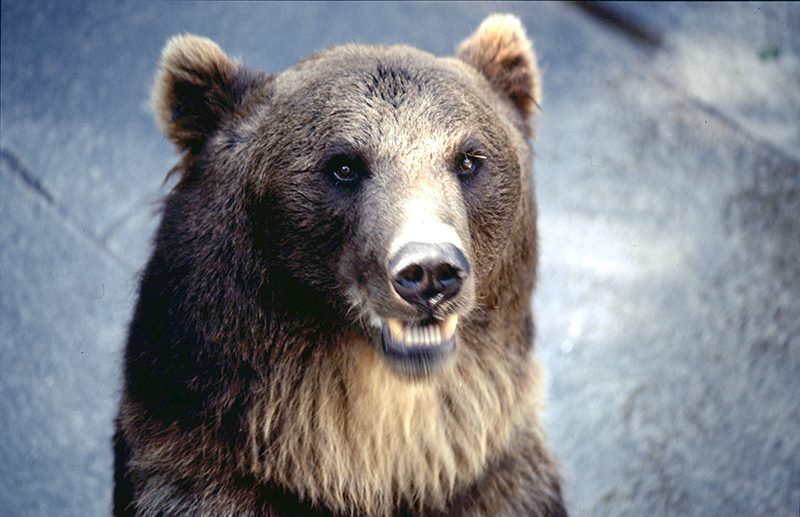
The next morning they set out with horses and hounds in search of a name for the town. Soon after, one of many small hunting groups cried victory. The Duke was not happy when he saw that the killed animal was a deer. He didn’t want to name his town after such a delicate animal. He envisioned a more fierce, powerful animal. So he did what many a leader has done and called the first shot invalid and sent the men out to find a more suitable animal.
As chance would have it, about a day later the Duke himself came upon a fierce bear ready to attack him. He pulled his sword and slew it. From that time forward the town was called Berne.
The Bears
First records of bears being kept in the city are from 1513. That was after the Bernese came back home after defeating the French in the battle of Novara. They brought with them the ‘captured standards’, whatever that may be, and a living bear.
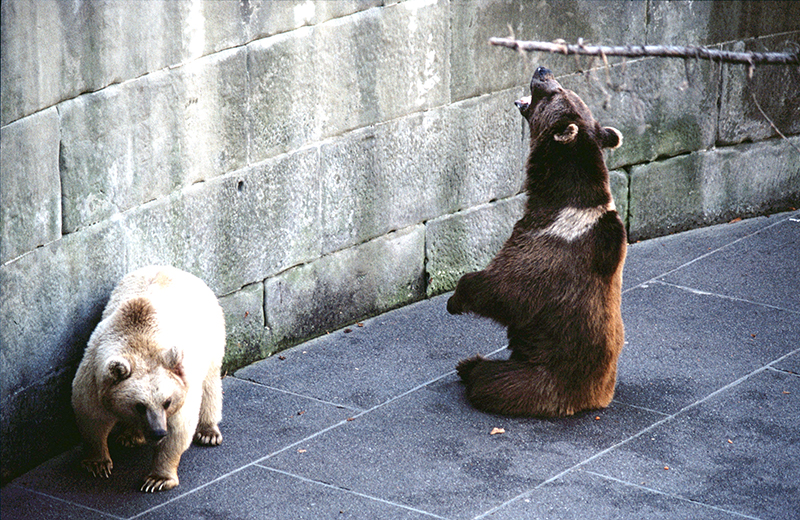
The first bear pit was erected in 1549 at the ‘Bärenplatz’ [Bear Plaza] which is now a pedestrian area where a market is held twice weekly. The bears were moved in 1764 to the ‘Käfigtürm’ [prison tower, stronghold] and 1825 to the ‘Grosse Schanze’ [large stronghold] in Berne. In 1857 the bears landed on the other side of town when the new bear pit was opened. Another, smaller adjacent pit to raise cubs was added in 1925. There they stayed for around 150 years. In the 1990s the pits were renovated to improve their living conditions but keeping bears in a pit remained a problem. In 2009 a ‘Bear Park’ was opened on the slope between the bear pits and the Aare river. The bears now live in a more natural habitat and still have access to the bear pits through an underground tunnel.
Twice since the Bear Park has opened visitors have tried to get closer to the bears by climbing over the fence. The first time that happened the person was mauled but lived. He was lucky the bear really wasn’t interested in him because it had just eaten a large meal. The second time could have ended in death because the bears had just come out of hibernation and were hungry. Luckily someone saw what was happening and was able to stop the mentally confused person from getting over the fence completely.
Coat of Arms
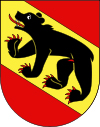
The bears are more than just a symbol of the past, it’s Berne’s symbol of strength. It’s on the coat of arms and has stayed an important part of Berne. The bear is ever present and lends its name to restaurants, chocolate and pastries.
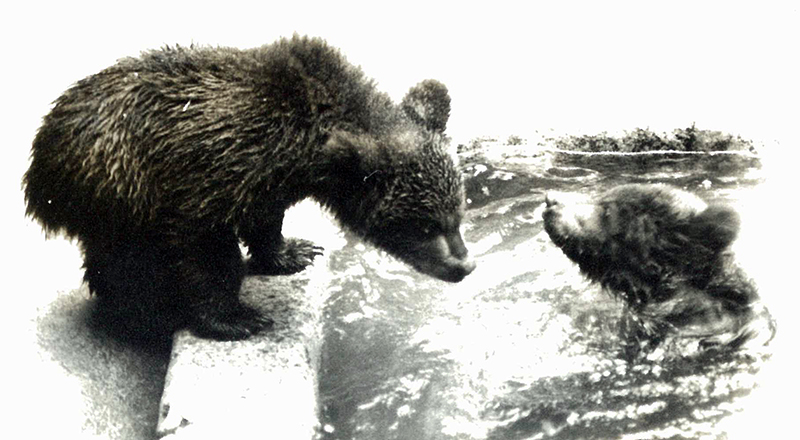
Restaurants and chocolate are good but Bernese have to face reality that they can’t be happy without their live bears. Point of fact, on March 23, 1798 the Bernese couldn’t hold back Napoleon’s advancing French army. The army kidnapped the bears and brought them to Paris. The act was meant to symbolize the end of the Bernese era. Or, it could be that the French hadn’t forgotten that a mere 300 years earlier, in 1513, the Bernese had stolen a bear from them after they won the battle in Novara. Naturally 300 years is a long time to hold a grudge but I guess it could happen. At any rate, it was humiliating for the Bernese and they were somewhat lost without their bears.
In 1810 the canton of Bern received the gift of two young bears from a military captain from the canton of Vaud. They were promptly put into the empty bear pit. The Bernese have been happy ever after.
 -
- -
-