

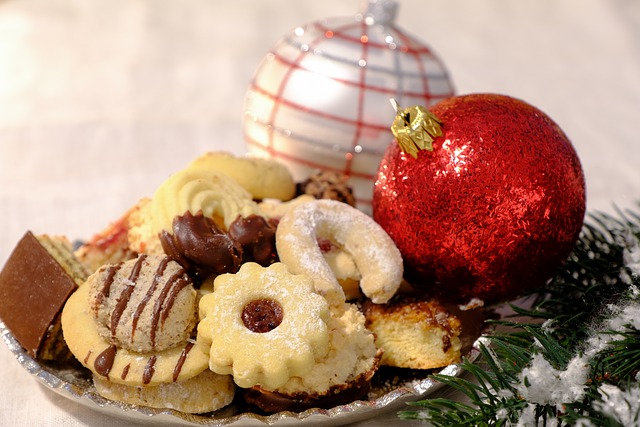
Christmas is just around the corner and hopefully you’ve finished making all your gifts or purchasing things that can’t be made. You’re almost there. But before you can take a deep breath and say finished, go over your list again, you know, check it twice. Make sure you have something for everyone. And don’t forget to include Santa on your list. In America it is traditional to leave some cookies and milk for Santa but why not put out a few carrots for his reindeer too this year.
Where did this Tradition of Cookies and Milk or Even Gift Giving Begin?
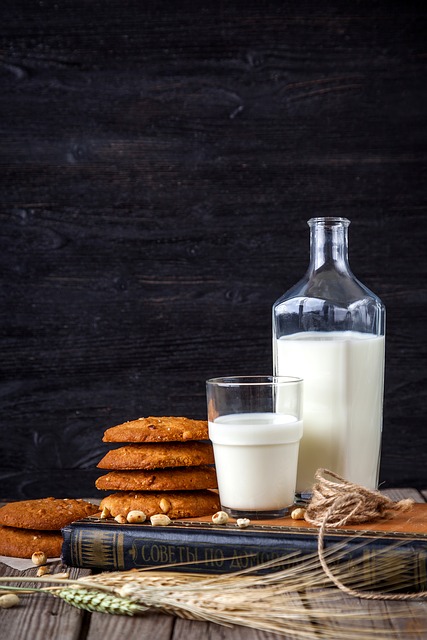
Well that’s a loaded question. It seems that everyone’s got an opinion so there’s a plethora of theories out there. It looks like a lot of these are based on or revolve around Saint Nicholas, the patron saint of children. I’ll try and put the theories I’ve found in a chronological order from when they began as best I can. I apologize in advance if I have missed anything obvious.
Norse mythology. One of the oldest theories goes all the way back to ancient Norse mythology. Odin, a major Norse god, was said to have flown through the air on a white horse named Sleipner, always with two black ravens. During the Yule season, children would leave straw and carrots in their boots as a gift for a hungry Sleipner. I guess they weren’t too worried about Odin or his ravens wellbeing. But it must have been okay because in the morning they would find their boots filled with gifts.
Middle Ages, Europe. Others believe that the tradition might have originated from the Dutch Sinterklaasfeest. It was both a feast and a way to help the poor. The children would put hay and carrots in their shoes for Sinterklaas’s horse and wealthier parishioners would exchange them with coins. It was celebrated on December 6, the name day of Saint Nicholas. Something similar to what was happening in Holland was also happening in Germany. People would adorn their paradise tree (the forerunner of the Christmas tree) with wafer cookies and apples in hopes that St. Nick would stop by their house.
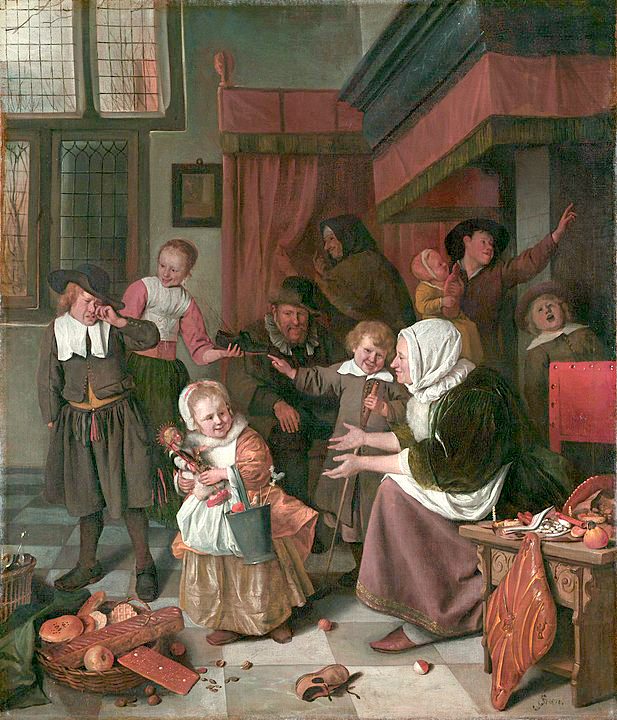
16thand 17thcentury, Europe. Protestant reformers wanted to abolish the Catholic cult of saints. But they also wanted to keep the beautiful tradition of gift giving. In short, they exchanged Saint Nicholas for the Christ Child and moved the date from December 6th to Christmas Eve. In effect St. Nicholas was exiled.
17th century, America. It’s a pretty sure bet that the Dutch settlers brought their tradition along with Sinterklaas to New Amsterdam (soon to become New York). It is entirely possible that sometime in the 1800s the Dutch Sinterklaas morphed into the American Santa Clause.
19th century, Europe. Back in Europe again, although the Protestants were successful in creating a gift giving feast on Christmas, St. Nicholas was able to emerge from exile. Both traditions abounded during this time. St. Nicholas day is still celebrated in Switzerland and Europe on December 6th. Albeit the children put out empty shoes for St. Nicholas to fill.
20th century, United States of America. Another theory is that the tradition of leaving out cookies and drink appeared during the late Victorian Era. People in America would throw elaborate Christmas parties and everyone would gather for this celebration. The host or hostess would leave Scotch and wafer cookies out by their Christmas tree for St. Nick in thanks for their blessed life. And, yes, you read correctly, Scotch was left for St. Nick!
1930, America and the Great Depression. Some think this tradition of cookies and milk as we know it today began during the time of the economic hardship. It emerged as a way for parents to encourage generosity in their children.
What’s this tradition like all around the world Nowadays
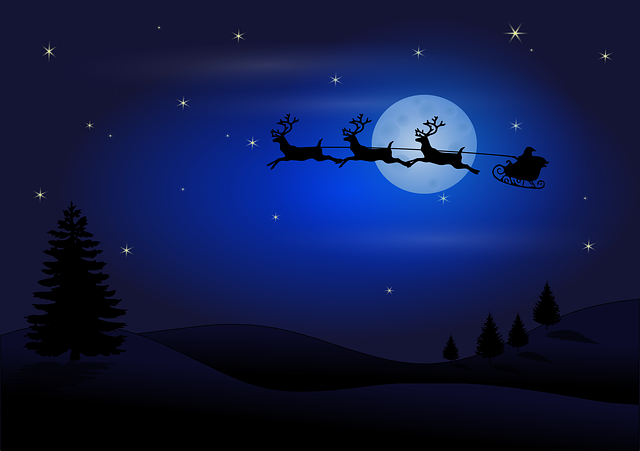
Taking a quick ride around the world, it’s interesting to see what Santa has waiting for him. After reading this you may also understand why Santa is, well, to put it nicely, copious.
Australian children start Santa off with a nice cold beer, after all, it is summer there. They may also leave him some cookies and milk and remember the reindeer with some carrots.
The children in Sweden probably know Santa’s still got a long journey in front of him. Nothing like adding a little caffeine to the equation to keep him awake for the rest of the night.
The children of Denmark leave Santa a bowl of rice pudding to keep him happy. It’s said that the elves will cause mischief if it is missing.
Moving on to Germany Santa takes a break from eating and drinking and puts on his reading glasses. The children there leave handwritten letters for the ‘Christ Child’, a symbolic representation of the Christmas spirit who is responsible for bringing presents on Christmas. Though many German children mail their letters before the holiday many leave them out on Christmas Eve, decorated with sparkly glue or sugar crystals. On Christmas morning, the letters have been collected, and gifts left in their place.
In the Netherlands, where children still believe that horses pull Santa’s sleigh instead of reindeer. On Christmas Eve, they leave carrots and hay, sometimes stuffed into shoes to feed the exhausted animals. In return, they might hope to receive such holiday treats as chocolate coins, cocoa, mandarin oranges and marzipan.
The next stop is France. French children leave out a glass of wine for Père Noël (French for Father Christmas) and fill their shoes with hay, carrots and other treats for his donkey, Gui (French for ‘mistletoe’).
Going back north, in England Santa is treated to some mince pie filled with either meat or dried fruit and a glass of sherry to go with it.
Before he crosses the Atlantic his last stop is Ireland. There Santa can look forward to a pint of Guinness and if he hadn’t had enough in England, some more mince pie. Then, almost certainly for safety reasons he’ll probably put the sleigh in autopilot and head to the Americas.
Going south first, he stops in Argentina. There the children leave Santa and his team of reindeer hay and water.
Then, in Chile Viejo Pascuero, or Old Man Christmas is given a special treat of Pan de Pascua, which is a cake flavored with rum and filled with fruit and nuts. This bread reminds me a little of fruitcake. And don’t let the word Pascua confuse you, Chileans use both the words ‘Navidad’ and ‘Pascua’ interchangeably for Christmas. It is a Christmas cake and Old Mon Christmas. It also looks like this trip is being pretty hard on Santa. He ages in the short span of one night from a ‘Father Christmas’ to an ‘Old Man Christmas’.
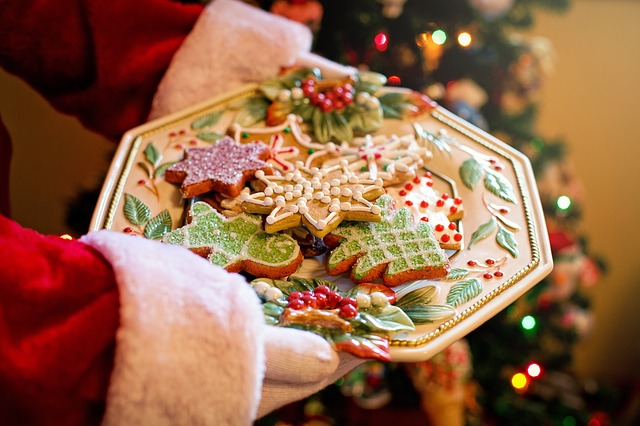
By the time our size-challenged Santa gets to the United States, he’s probably loosened his belt a couple of times. The children here traditionally leave out a plate of cookies and a glass of milk for Santa Claus on Christmas Eve. I was a bit shocked to hear that one of the favorite cookies to leave Santa were Oreo cookies. I always thought that any homemade cookie was far superior to the store bought kind. But I suppose if that’s the best you have to give, Santa will appreciate that too. He’s a good man. As far as the milk goes, if that’s what he likes then I’d be the first in line to give him a big glass of it. That would make one less that I would have to choke down. A win-win situation.
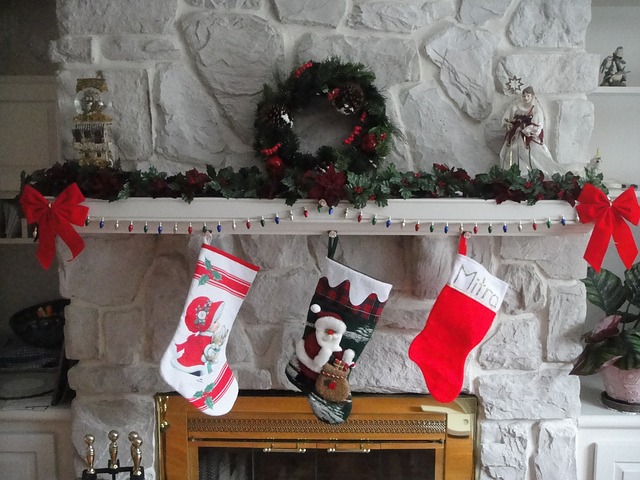
In America, our family always hung stockings over the fireplace. No use having him have to search for stockings to fill and it is just so much easier to hang stockings than shoes. With the added advantage that Santa sees them when he comes in. Okay, they were probably slapping in his face, blocking his view and getting caught on his hat as he came in through the chimney. But shoes would probably hurt and we really didn’t want him to miss them.
When we hung them they were empty, but that’s not because we had forgotten to thank him, my parents made sure that that never happened. We always set out a glass of milk and cookies on a plate for Santa usually with a holiday themed napkin next to it. I’m sure you’ll agree that eating cookies from a plate is immensely more appetizing, not to mention much more hygienic than digging them out of an old sock or a worn-out shoe. And where in the world would you put the milk? In one of those flimsy take away cups with a straw? I think not. The table variation is much more practical. Before he left he always filled our stockings chock-full of treats and smaller gifts for Christmas morning.
As far as what kind of cookies we put out for Santa, I’m sure it was just a coincidence that they were always my father’s favorites, too.
Image sources: pixabay.com
 -
- -
-