

Gnomes (pronounced ‘nome’). Some people love them, trust them, talk to them and others hate them. Personally, I had never even heard of them until I moved to Switzerland. I found out quickly my mother-in-law was not a gnome-lover. My husband teased her occasionally about getting her one, but never did. There were no gnomes or garden dwarfs, as they are known in Switzerland, in her gardens. Ever.
That was my only ‘contact’ with white bearded gnomes wearing pointed hats. It formed my opinion in the gnome question. For whatever reason, for me they were something you did not under any circumstances put into your garden.
Gnome Lovers
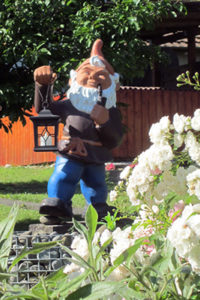 But, ask someone who loves gnomes about them and you would hear them talk about a living being. A gnome resides under the earth and guard earth’s treasures, like gold. They tend to the garden at night. If they get caught in the daylight the sunrays turn them to stone (or plastic, as it were). As to what they look like, typically they wear solid colored clothes. The red, pointy hat and beard is another things gnomes usually have in common. There are both gnome-men and gnome-women although the women are thought to be beard-free.
Origins
The origin was probably in ancient Rome. Statues of the fertility god Priapus were often placed in gardens. During the Renaissance the Swiss alchemist, Paracelsus described garden gnomes as “diminutive figures two spans in height who do not like to mix with humans.” Ah, that Swiss was a believer. On the other hand, being an alchemist in the Renaissance, the magical process of transformation was right down his alley.
During the 1700s gnome-statues were made of wood or porcelain and often used as household decorations. Even Brienz Switzerland, known for their wood carvings, got in on some of the action with their wooden house dwarfs. But it seems like the Germans really fell in love with them. Around the mid 1800s the dwarfs multiplied into the wealthy gardens in Germany, France and England.
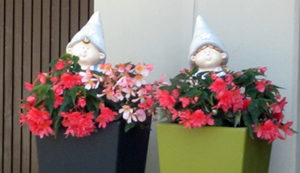 Once they were affordable, gnomes weren’t only populating wealthy gardens. They started gardening in the working class and suburban gardens. Their esteem came and left in waves. In 1937 gnomes made a come-back after the Disney feature “Snow White and the Seven Dwarfs”. What were their names again?
Sometimes people prank with gnomes. ‘Gnoming’ or ‘Travelling gnomes’ dates back to the 1970s. Henry Sunderland took his own gnomes and photographed them while travelling in the Antarctica. Somehow that transformed into stealing garden gnomes and taking them on vacation. Then photographing them in front of attractions and sending the pictures to the owners before returning them safely back home. The 2001 movie Amelie popularized ‘gnoming’ when Amelie sends her father’s gnome out to many destinations in the world.
Seriously Speaking
Gnomes are controversial in serious gardening circles. For many they are tacky, non-desirable objects. For example gnomes were banned at the Chelsea Flower Show for 100 years! If you’ve never heard of the Chelsea Flower Show, that is THE show in England. Although gnomes were banned, some fun loving gnome-believers snuck them in their exhibits for good luck anyway. One person won 9 gold medals before she was found out. Since 2013, the 100th birthday of the show, the ban has been lifted.
Obsession
There was a BBC report on a woman named Ann Atkin who houses a gnome reserve. Definitely a gnome-lover. Watch this and smile.
In Switzerland I don’t believe gnomes can be found in epic numbers, but they are there. All you have to do is open your eyes and look. I’ve included pictures of some that I see in the area while walking our dog. There’s another one that I decided not to photograph because sunlight caught him and turned him into plastic while mooning. I guess gnomes will be gnomes.
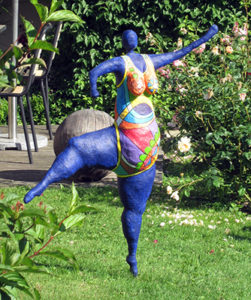 The reason for gnomes in your garden is probably just to make you feel good and smile. What about gnome-haters? Don’t they want to smile and feel good too? One house that is on our dog-walking route has no gnomes in their front garden but you still smile.
My guess is it isn’t an original Niki de Saint Phalle, who incidentally, married the Swiss artist Jean Tinguely. Still, I have really no idea how much they cost, so maybe it is an original. Who knows? However, this optimistic, light-hearted dancing Nana makes you smile. What more can you ask for?
Gnome-men est omen. Are they a good or bad omen? You decide.
 -
- -
-