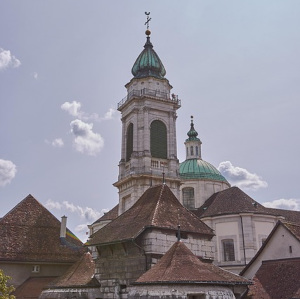
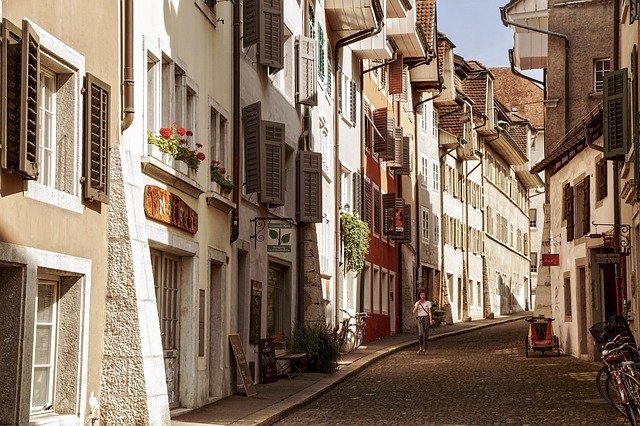
Solothurn is a beautiful little Baroque town on the banks of the Aare river not far from where we live. It was built between 1530 and 1792. But settlements have been in the area for much longer than that. Finds can be dated back to the Old Stone Age period. Now that’s pretty old.
At some point in the past someone noticed that the number 11 and its multiples, 22, 33, 44 etc. seem to appear frequently in connection with Solothurn. I’m tipping that that happened right around the time Solothurn was being built, and that person was sitting, daydreaming, looking out the window at school. I don’t know about you but I always seemed to get my best ideas doing that. Anyway, that a whole city and all its inhabitants can be fascinated by the number 11 sounds bizarre but it’s true and it’s still true today. The Solothurn people are proud of their ‘holy’ or ‘magical’ number eleven, written ‘öufi’ in the Solothurner dialect.
The Legend of Eleven
There are a sleuth of legends, or maybe just eleven, who knows, of how Solothurn was drawn to the number eleven. So, to put us on the same page, here’s a legend from the book ‘Leben am Jurasüdfuss – Grenchen, Solothurn, Olten’ [Life at the foot of the Jura – Grenchen, Solothurn, Olten] by Capus, Alex, Pedro Lenz and Jürg Stauffler, published in 2005. Keeping with the ideology of legends1 and hearsay2 I got this from a source who maybe read the book or maybe not. But it is interesting nonetheless.
This legend is about a small village called Solothurn. The inhabitants of the village were all old and there were no children. There was not a shimmer of light and it was always dismal, dark and gloomy there. The people of the village knew no joy and heard no laughter. The situation was dire, to say the least.
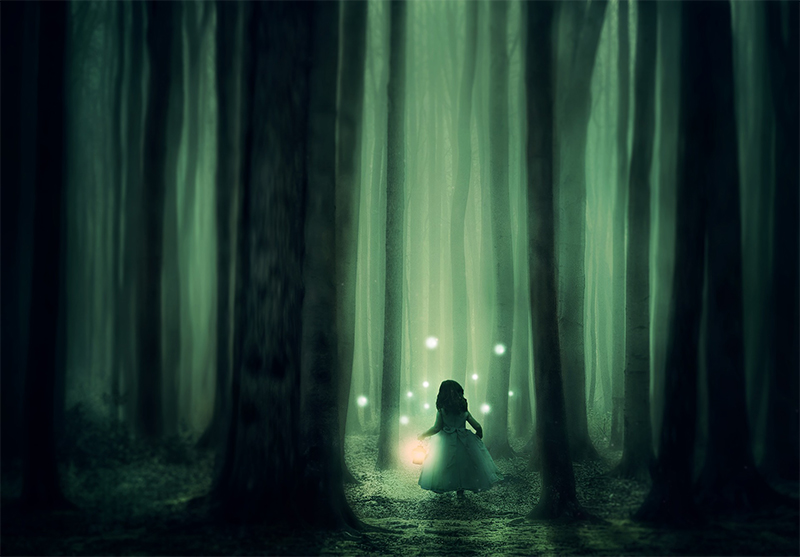
One day the elves of the ‘Weissenstein’ [White-stone3] which is located just north of the town, decided to do something about the situation. They sent eleven elves out on a mission. Why eleven, you may ask, I’m not really sure but it’s interesting to note that the word ‘elf’ in German means both ‘elf’ and ‘eleven’. Their mission was to dress and act as children and thus show the people of Solothurn what it meant to feel joy and happiness. Of course it was a complete success and from then on life in Solothurn was full of sunshine and contentment. There was laughter in the streets and joy in the people’s hearts. The women bore children and the village grew into the vibrant and pulsating city it is today.
Eleven Elevens
So that was the beginnings of the elevens. And, as quite often the case, the more you look the more you find. And, as I mentioned before the whole city and its people are fascinated by the number, even today. So in honor of tomorrow, November 11th, a nice little double 11, I will list eleven of Solothurn’s elevens.
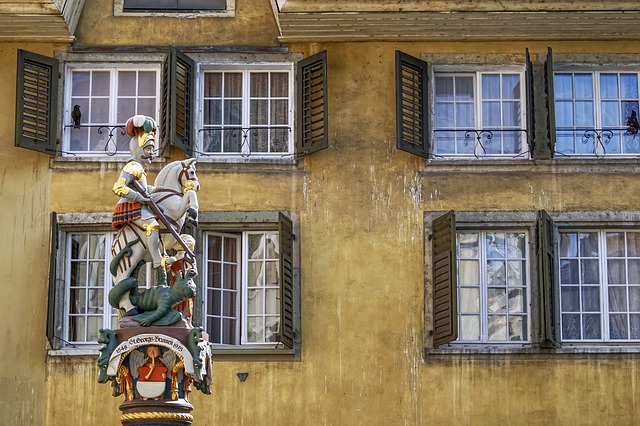
- There are 11 different guilds, or societies mentioned in Solothurn’s history.
- In 1252 the guilds voted for the town’s 11 member council.
- In 1481 Solothurn became the eleventh canton of the Swiss Confederation.
- There are 11 ornate fountains that were constructed in the 16th century. It is alleged that Solothurn built that many on purpose.
- Around 1581 the canton of Solothurn was divided into 11 protectorates.
- There are 11 towers in Solothurn.
- There are 11 chapels in the town.
- There are 11 museums in the town.
- Since 1999 the ‘Öufi-Uhr’ [Eleven-clock] in Solothurn has been keeping time with only 11 numbers on its face. It plays the ‘Solothurner Song’ on 11 chimes and was designed by the artist Paul Gugelmann (born 1929) of Gretzenbach, Solothurn.
- Öufi-Bier [Eleven-Beer] is a local beer. The Öufi-Brewery opened its doors on November 11th 2000 and has been brewing beer ever since.
- And last, but certainly not least on my list of eleven is the St. Ursus Cathedral, I’m counting this as one. It seems the architect of the St. Ursus Cathedral, Gaetano Matteo Pisoni was fascinated by the number’s mythical status. But it might help that he was possibly ‘ordered’ by the government to include the number 11. Whatever the reason, he designed the entire St. Ursen Cathedral with eleven in mind and cemented the ‘holy’ number into Solothurn’s history.
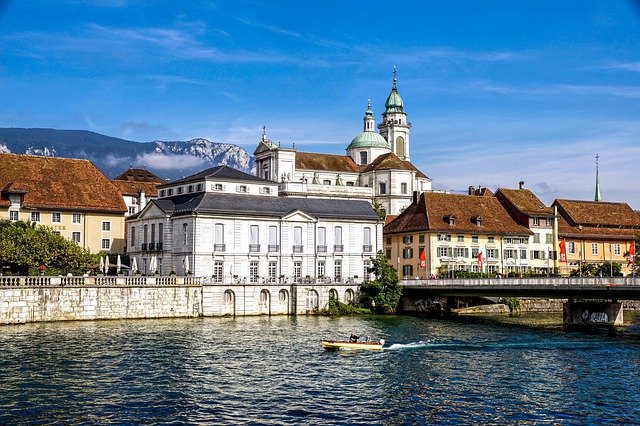
- The stairs leading to the front entrance is divided into 3 sections each with 11 stairs.
- There are 11 doors.
- There are 11 altars.
- All 11 alters can be seen from just one place in the nave – the 11th black stone.
- One of the alters is made out of 11 different marble types.
- The kneelers and pews are arranged in rows of 11.
- The number of pipes in the organ is divisible by 11.
- The façade is 3×11 meters high.
- The bell tower is 6×11 meters tall.
- The tower holds 11 bells.
- To top it off, the Cathedral took 11 years to build (1762 – 1773).
Elevens are really everywhere. Now all Solothurn needs is a film about this, after all, they already have a film festival to showcase it. How about calling it ‘Solothurn’s Eleven’ that has a nice ring to it, doesn’t it?
1 A legend is defined as a story that appears mysteriously and is usually false; contains elements of humor or horror and is popularly believed to be true.
2 Hearsay is defined as information or opinion that is widely spread without any authority of confirmation of accuracy.
3 Weissenstein is a mountain (1’395 meters) on the south-eastern part of the sub-alpine mountain range called Jura.
Image sources: pixabay.com
https://pixabay.com/images/search/solothurn
 -
- -
-