
I’ve said it before and I’ll say it again, German and therefore the Swiss dialects are very descriptive languages. Oftentimes the first time you hear a word you understand it inherently with no need for further explanation. If that’s not the case then context and intonation are the second go-to. I’ve dug deeper into my bag of German words and come up with some gems.
Sprachgefühl – literal translation: language feeling. It’s the sense of understanding and grasping a language. Need I say that most Swiss have an inborn ‘Sprachgefühl’. They like to collect languages similar to collecting stamps and have a sixth sense of when to say ‘der’, ‘die’ or ‘das’. Which always amazes me. It’s like they can see the correct gender. Now that is ‘Sprachgefühl’.

Wanderlust – literal translation: hiking desire. There’s no secret hidden behind these words, the meaning is exactly the strong desire to hike, travel and explore the world. It seems this German word is actually used in English, too. Although I personally have never heard it used by an English speaking person. I’ve only heard ‘Wanderlust’ used in connection with hiking. If someone was talking about their desire to travel and see the world, they would typically use the term ‘Fernweh’ [literal translation: remote,distant and ache,pain].
Kopfkino – literal translation: head cinema. It’s time to pop some popcorn because the private showing is about to begin, in your mind’s eye that is. ‘Kopfkino’ is when you see how something is going to play out before it has. It’s an entire film in your mind.
Augenblick – literal translation: eye glance. It means in the blink of an eye; fast. So, instead of saying ‘I’ll be there in one tenth of a second’ just say ‘I’ll be there in a blink of an eye’.
Words that Describe People

Scherzkekse – literal translation: a joke cookie. Who would ever think to combine these two words together and why? Maybe it comes from the happiness that comes with cookies are as a satisfying as a good joke? A ‘Scherzkekse’ is a fun kind of person with always a joke in store.

Doppelgänger – literal translation: duplicate goers. This is an easy word, if you have goers or walkers you are talking about people. Duplicate people are look-alikes, not identical twins.
Pantoffelheld – literal translation: slipper hero. No tights, no cape, no mask and no special powers. This is a poor, henpecked man. At least his slippers think he’s a hero.
Streicheleinheit – literal translation: combines the words for stroke or pet and entity, or a unit. So this is one unit of a stroke. That doesn’t sound like much which is why you usually talk about these in the plural. The more the better. Although the word is sometimes simply translated into ‘caress’ it’s more than that. Its translation encompasses more, it’s more along the lines of ‘TLC’ (tender loving care).
Getting Older
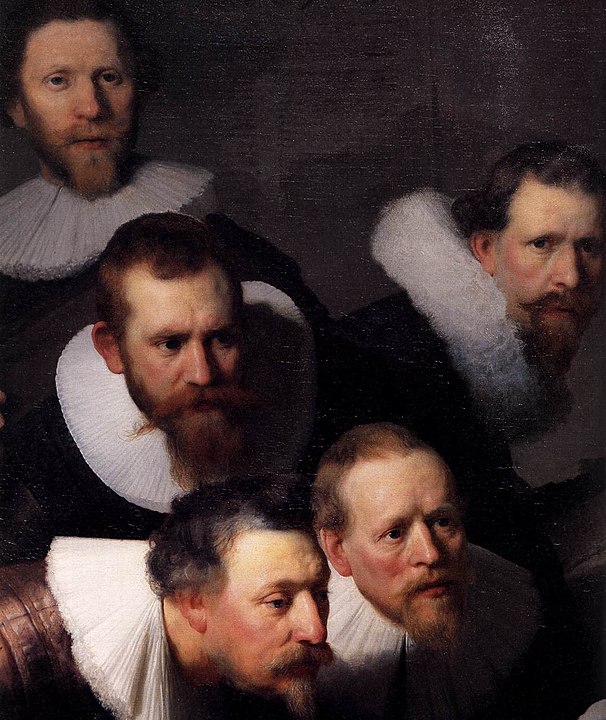
Geheimratsecken / Ratsherrenecken – literal translation: secret secretary corner / council men’s corners. To understand this word you have to go back in history a bit. A ‘Geheim Rat’ was the title of the highest advising officials (men) that reported directly to their ruler. To be one of these men you had to have experience, meaning you were somewhat older. These words play off the honor of these men so this word has positive undertones. The ‘corners’ refer to the receding hairline that quite often form ‘corners’ before balding more. So in the end it’s just a nicer way to describe calvities frontalis; balding.
Hamsterbäckchen – literal translation: hamster cheeks. At first you might think this is the way your face looks after you get all of your wisdom teeth pulled at once. You could describe your puffed up cheeks in that way and everyone would know what you are talking about. But normally what people are talking about when they refer to hamster cheeks is the loose skin hanging around your chin. Some people get facelifts so they don’t have to face the fact that they are ageing. I say it is what it is.
Tugging at your Emotions


Mutterseelenallein – literal translation: mother’s souls alone. It’s an intensifier for the word ‘alone’. Alone, very alone, mother’s souls alone. In the 19th century the word was filled with emotion and meant total abandonment and despair. Today it can mean the same as in the 19th century but it can also be a little less dramatic and ‘only’ mean alone, as in no one else was there.
Sehnsucht – literal translation: combines the words for longing, yearning and addiction, obsession. So you get an obsessive yearning. It’s an emotion and a pretty strong one at that. But it’s not only a yearning, it contains the component of not being able to achieve it. So there is something melancholy about it too. It’s often used to describe how you deeply miss and wish to see someone or be someplace.

Geborgenheit –The word ‘Geborgenheit’ is one of those German words that can’t truly be translated. The literal translation is ‘the feeling of being safe’ but just ‘feeling safe’ doesn’t do it justice. To say something like ‘I felt safe from flying bullets as I hid behind a car’ would not translate in German to ‘Geborgenheit’. ‘Geborgenheit’ goes so much beyond that. It’s a feeling strongly associated with intensely emotional moments. Granted, hiding behind a car while bullets are buzzing past you is probably very intense but the German word ‘Geborgenheit’ evokes a feeling of safety similar to returning or being home. It’s an all encompassing feeling of safeness and love when you are surrounded by people you love and who love you. It’s that moment of peace, love, comfort and yes, safety.

Gemütlichkeit – Just like the word ‘Geborgenheit’ this word can’t be truly translated. The literal translation is ‘the feeling of comfort/cozy’. But it is so much more than just cozy, ‘gemütlichkeit’ describes a whole atmosphere. You can’t translate it but you can describe it. Being on a couch can be cozy. But, being on a soft couch, under a warm blanket, surrounded by family with a cup of hot chocolate in your hands and maybe a flickering fire in the fireplace and being totally content with life is ‘gemütlichkeit’. To put it another way you could say that if cozy were a movement in a symphony, ‘gemütlichkeit’ would be the whole symphony.
Speaking of music and ‘gemütlichkeit’ a rather famous song comes to mind: ‘The Bare Necessities’ from Walt Disney’s animated movie ‘The Jungle Book’. The original English version of the song plays off the homophone ‘bare’ and ‘bear’. The song in German is called ‘Probier’s mal mit Gemütlichkeit’ which translates into English as ‘Try it with ‘Gemütlichkeit’’. In essence the German version doesn’t stray too far from the English content but it’s more along the lines of ‘try taking life a little bit easier’ or ‘more laidback and relaxed’.
The song in German:
The song in English:
So go ahead, try some ‘Gemütlichkeit’ it can work wonders.
 -
- -
-