

This is a small slice of the story of an American immigrant, Henry. He was born in 1839 near Zurich in Switzerland. I want to tell you a little bit about Henry and his life in the United States around the time of the Civil War. This is his personal sphere, his perspective.
A few years ago direct relatives of Henry graciously allowed us to transcribe and translate some of the letters and other material that he wrote. They agreed to let us publish this post on this site, too. Thank you!
I wrote about how we got involved in this project in the post Genealogy at a Glance – The Blog Connection. Check it out if you haven’t already.
So, in 1857 Henry immigrated to America with his parents, younger brother and an uncle. All in hopes of a better life, naturally they had hopes of a better life. No one goes anywhere in hopes of a worse life, now do they? They crossed the Atlantic via ship from France. And after 6 weeks on the ocean they landed in a port in New Orleans. From there they travelled about 2 to 3 weeks taking smaller steam boats up the Mississippi to their new home in Missouri.
Confederate and Union loyalties in 1860 were divided in Missouri. We don’t know what motivated Henry to join the army, possibly the call for volunteers by president Lincoln. Whatever the motivation he enlisted 165 years ago today on June 23, 1861 for 3 months.
On Tuesday, December 10 of the same year, Henry and his brother Alexander enlisted for 3 years. Alexander had to have parental consent to enlist because at 18, he was underage. They were both in the same unit, fighting for the Union side.
Our First Translated Letters
Some of the letters that Henry wrote home to his parents during the war survived the time. In his letters his tone was cordial and light. He described the cabbage that they were served as different from what they were used to in Switzerland. There was small-talk about other men in the same unit. Of course there was no details about the war itself. That certainly isn’t something you write home about.
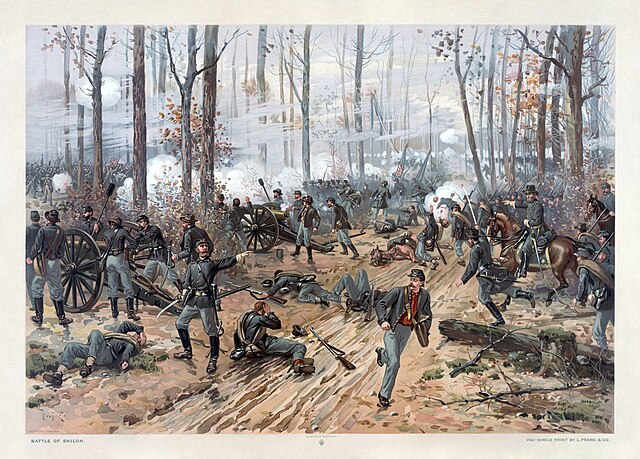
We found out later, in another document, that shortly before the Battle of Shiloh Henry’s rifle was not functioning correctly. While he was on his way to exchange his broken rifle, the Confederates appeared and a battle took place. Although the Union forces held the field despite heavy casualties, many Union soldiers were taken prisoner, his brother Alexander included.
Alexander and his Destiny
One of the very first letters that we worked on threw us smack-dab into the horrible and difficult time he and his family must have been facing. Still, the letter was light and full of confidence.
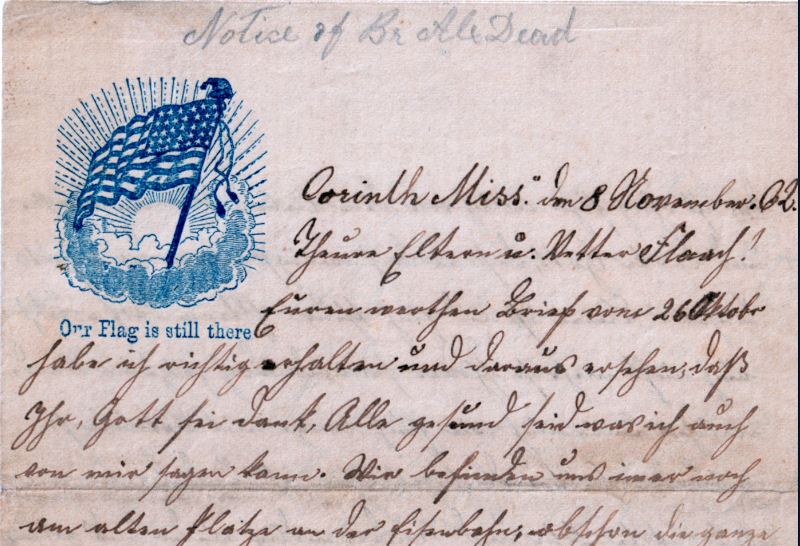
Henry wrote that, following what seemed like an eternity of worry and anguish, the rumor that Alexander was paroled was true. Meaning he was let free, usually in exchange for other prisoners and with the promise not to take up arms again. Which many did nonetheless. Alexander had been in prison for six months.
Prison and the Catastrophic Conditions
The Battle of Shiloh was fought early on in the war, so the conditions weren’t at their very worse, but were certainly bad. After being released but before returning back home or to his company, he landed in a hospital in Washington D.C. with diarrhea or dysentery. Dysentery is an infection of the intestines resulting in severe diarrhea often accompanied by cramps and fever among other things. Practically every prisoner suffered from the one or the other. That was due to primarily the lack of sanitation practices and contaminated water. Proper hygiene during this time was nonexistent. Even the Confederate General Robert E. Lee at the battle of Gettysburg suffered with severe diarrhea which certainly had to make it difficult to concentrate on the job at hand.
Simple things such as placing a latrine downstream and away from the clean water supply were often overlooked. This foul water would quickly lead to water contamination which made the development and spread of disease much more frequent. Now add crowded prisons to the equation where hygiene was appalling and food was lacking; you end up with soldiers whose bodies couldn’t fight off any disease.
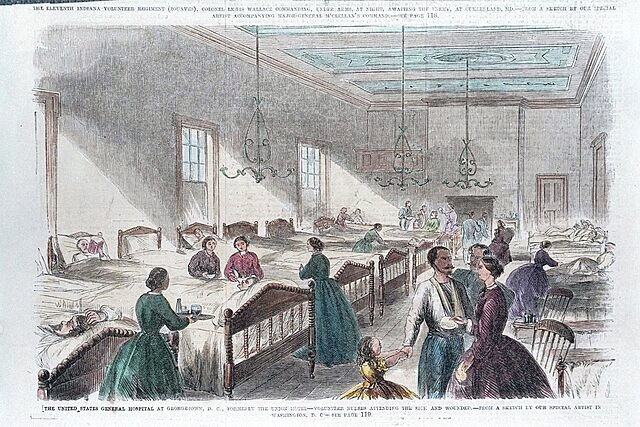
Doctors at that time neither knew how the men got this disease nor how to cure it. Treatments of the time included home tea remedies, dogwood bark as well as opium, and castor oil to name a few. During the war around 100,000 men (both from Confederate and Union forces) died of dysentery. That was more people than died from hostile fire.
Letters Home
Probably within hours after he sent the letter confirming the parole, he got news that no one wants to get. All his hopes and anticipation of seeing his brother again were shattered; his brother had died. On the same date he wrote a second letter. This time to his uncle asking him to break the news to his parents.
This letter was probably as heartbreaking as any such letter can be. It was tragic. You could feel the sorrow, sadness and the inexplicable loss seep through to the point that it was difficult to read. Henry’s religion and belief is probably what saved him. That, and as horrible as it sounds, probably his broken rifle.
Henry’s Memoirs of the March to the Sea
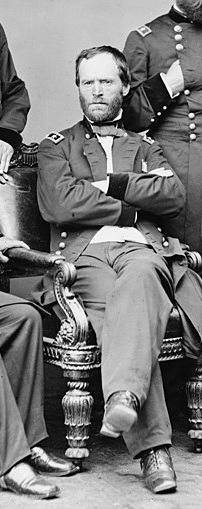
For those not in the know, the March to the Sea was a pivotal Union campaign led by General Sherman. In over five weeks, he used a ‘scorched earth’ strategy aimed to break Southern morale. It demonstrated the Confederacy’s inability to protect their people. It hastened the war’s end but was inhumane. Since 1977 the Geneva Conventions, Article 54 of Additional Protocol I bans scorched earth tactics that deprive civilians of food and water.
Henry was part of this huge endeavor but left shortly before getting to Savannah because his service duty was over.
Almost 40 years after the war ended he wrote his 1903 ‘diary’. He titled it ‘War of the Rebellion’ which honestly didn’t make any sense to me. I left it as it was and translated and edited the rest of the work first. He said that he used old letters he had written to refresh his memory and get the correct order of things. His account was more about where he was. He does, however give the reader small glimpses into the world that he lived in at that moment.
Contemplating the title again, I realized that I had gleaned some information from a work called ‘The War of the Rebellion: a Compilation of the Official Records of the Union and Confederate Armies’. I researched it a bit more and found out that the Union side called the Civil War ‘The War of the Rebellion’. The term ‘Civil War’ became official in 1912. So, Henry had titled his work the way the people of the north called it.
Henry must have been watching me trying to figure this out from above. Shaking his head sadly, saying this woman needs help and then nudged me in the right direction.
Understanding Why he Wrote the Way He Did
Henry’s personal letters to his parents were in German and he signed it with his given name, Heinrich. His memoirs, ‘The War of the Rebellion’ was written in English. You must remember though, he had finished school before coming to America. He never formally learned how to write English. You could see this in some of his sentence structure and quite a few word choices. This made some of his texts sound strange and incomprehensible to the English-speaking-ear. If he wanted to write an English word that he had never seen written before he wrote it as best he could with the German spelling rules in mind.
The first time I saw this it was when he wrote: ‘Eiland’. All I knew at the time was that it was a place, probably along the Mississippi River somewhere. At some point I found a list of places on Mississippi River but there were no places that started with E.
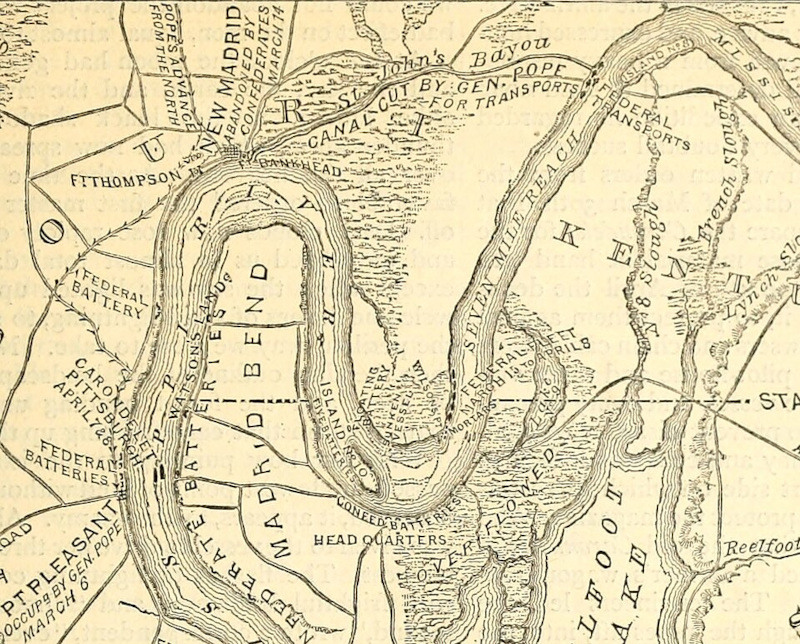
Then because I had no further plan of action my eyes just wandered through an alphabetical list of place names on the Mississippi. They stopped when they got to ‘Island’. I realized that if I pronounced what Henry had written using the German rules it sounded exactly like ‘Island’! ‘ei’ is pronounced in German like in English the letter ‘i’. Then I noticed that behind the word Eiland he had written ‘nb 10’. That corresponded perfectly to the name of the place ‘Island number 10’. Once I figured this out life was a lot easier on the translation scene, this happened pretty regularly, but we were only stumped once. By the way, Island number 10 no longer exists it was a sandbank that disappeared with time, it’s not on the maps anymore!
This Story Didn’t Leave Us Untouched
Henry and his family are like family to us now.
War reports are often a list of facts in which people and the individual in particular, play no role or only a subordinate one. In contrast, Henry’s letters open up a journey into the past and let us see the Civil War through his eyes. Here Alexander and he are the focus, and the facts are then added as a secondary matter. He gave us insight into his everyday life, his feelings, fears and worries.
Without Henry and the millions of other people who have emigrated from all over the world to the USA since the Mayflower landed in 1620 and have made the USA the melting pot of the world, the United States of America would be completely different today.
Seen in this light, Henry is not an isolated case, but a stroke of luck. If his records didn’t exist, at best we would only have the “key dates” of his life: when he was born, married, died and number of children.
Henry thus removes himself from the statistics in which the majority of other immigrants are recorded. This turns the static values into a personal destiny.
 -
- -
-
This is amazing and invaluable information, as written by Henry Roesch as he described a part of our personal and American History. I have long heard about Henry, his brother Alexander, the military prison, and the Sherman’s march to the sea, as relayed by my father, John Wilson. Written in German, we were unable to decipher Henry’s writings until your great efforts to translate it. I am so grateful for your efforts in regard to this endeavor. This information is of profound interest to me and would love to know any future facts in regard to the life of Henry Roesch.