
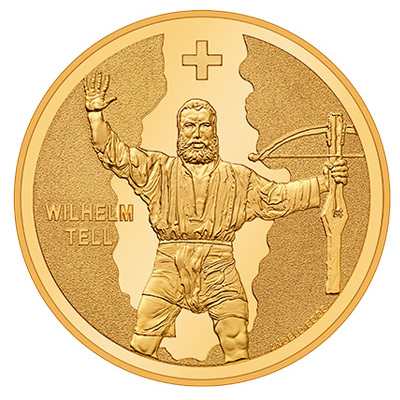
If ever a name is intertwined with independence and Switzerland it’s William Tell.
The Legend
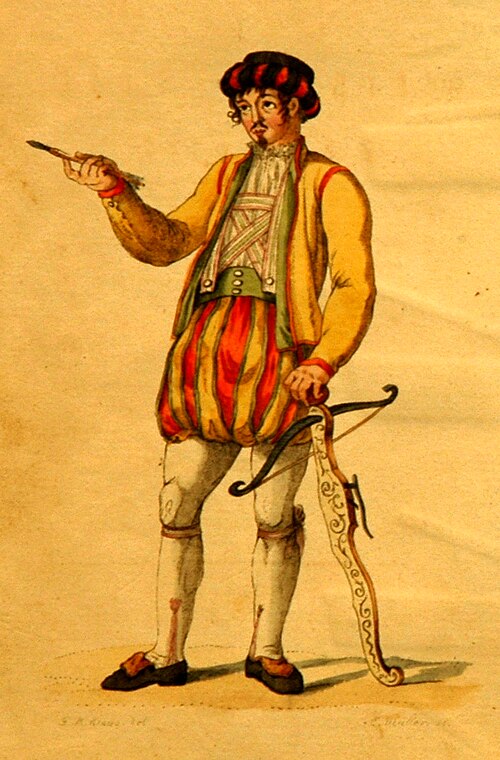
According to the tale, Tell is a peasant and expert crossbowman from Bürglen in the canton of Uri. As a sign of submission to the Austrian rule, everyone must bow before the hat of Albrecht Gessler, a bailiff in Altdorf. Tell refuses to submit. This angers Gessler but at the same time he is curious about Tell’s reputation as a marksman. He forces Tell to shoot an apple from his young son’s head which he does, hitting only the apple.
But Gessler sees that he had two arrows and asks why. Tell says the second one would have hit Gessler if his first arrow had hit his son. Now that didn’t sit well with Gessler and he ordered Tell to be imprisoned. Tell is taken across the Lake of Lucerne but escapes during a storm by leaping off the boat onto the rocks. Later he ambushes and kills Gessler. Justice returns.
Was Tell Real?
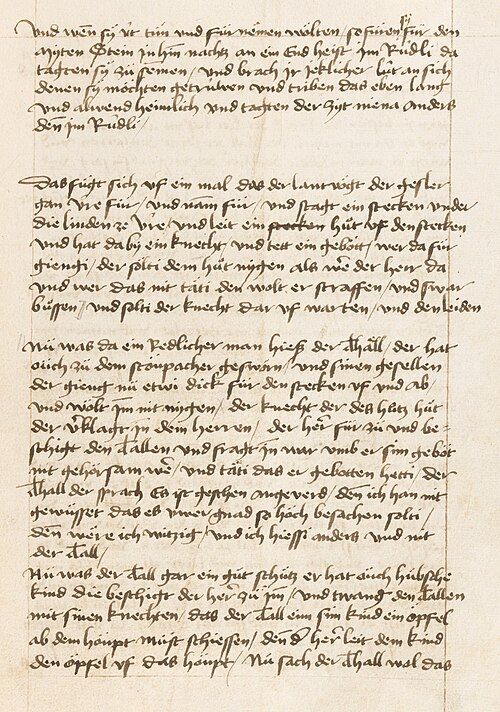
We know Tell through a legend and legends are often tied to real-ish people or events. The fact that I used the word ‘real-ish’ should tell you something. The first time his name popped up was sometime between 1467 and 1474 in the ‘White Book of Sarnen’ almost 200 years later than the event. That is similar to me writing about an incident that happened in the States around 1850, pre Civil War. I think my great-great-great grandfather was born around then. Even though I don’t know much about him, but I could write a chronicle, maybe.
Anyway, there is no solid evidence that anyone by the name of Wilhelm Tell did that apple-shooting deed. Scholars, people in the know, believe that the legend came together drawing from ‘oral traditions’ and possibly a composite of local rebel activities. So, sorry, Wilhelm Tell probably did not exist. Still, the struggle for liberation in the forest cantons of Central Switzerland developed into an unquestionable truth from an intellectual and moreover from an emotional perspective in the form of Wilhelm Tell.
The Pursuit of Freedom
Still that pursuit of freedom is undeniably there. Probably due to this legend people in Central Switzerland, where all of this took place, still have a patriotic perception of themselves. They distinguish themselves above all by a love of freedom and a want for independence, with a willingness to fight for what they believe in and defend it if necessary. Oh, can’t you just hear the patriotic music in the background when you read the last sentence?
Unfortunately historians, another word for people in the know, more or less agree that the alliances in Central Switzerland were probably formed to keep peace. Not necessarily in the pursuit of freedom. That sounds a lot more Swiss-like if you ask me; let’s just stay neutral, don’t rock the boat.
Founders of the Old Swiss Confederacy
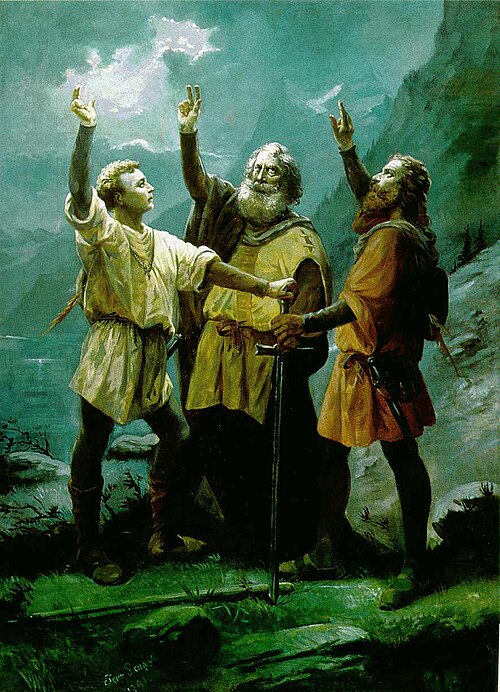
The founding fathers of the Swiss Confederacy were Walter Fürst, Werner Stauffacher and Arnold von Melchtal. Were they, at least, real people? The short answer; well, sort of. Walter Fürst and Werner Stauffacher were both very likely real. A person named Walter Fürst really existed and was a local leader in Uri during that time. Another political figure, Werner Stauffacher, from a prominent Schwyz family is also documented. As for Arnold von Melchtal, the ice is a bit thinner. The name is only mentioned in later legends and chronicles.
Of course it makes perfect sense to me that there are three men. Just two, standing side by side with one hand on the other each holding up a peace sign with two fingers doesn’t make good art. Where’s the solid composition? An odd number is always better: the number of flowers in bouquets and the number of men standing together taking an oath. Three. Find a third guy.
The Stuff Legends are Made of
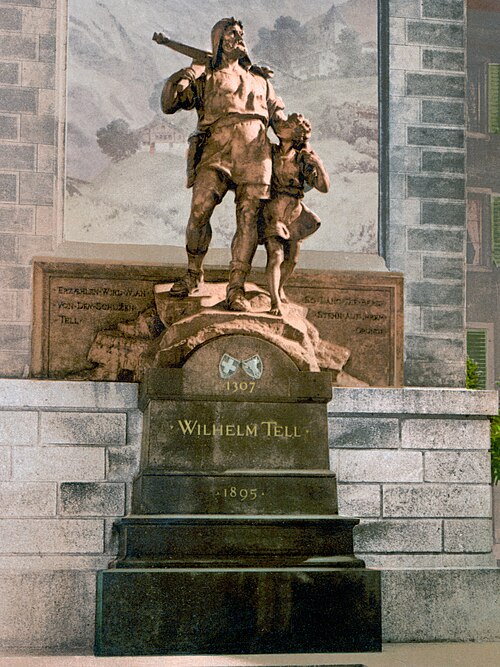
Back to our hero Wilhelm who may or may not be one of the three of the Rütli Oath. Although the ‘White Book of Sarnen’ includes Tell among the conspirators in addition to the other three. Other sources like the Tellenlied and the Tellenspiel bring Tell into the foreground, and even name him as the ‘first oath-taker’ replacing Fürst. Whatever the case is, Tell is our man of the hour for sure.
A legend is a polished story that is emotionally satisfying, and politically useful. It’s not a neutral historical report. And, on the hero side, you’ve got to admit that Tell is projected larger than life. He’s a super fearless rebel, a loving father and the apple-shot weaponizes this love. He is the perfect ‘small man, great virtue’ who can and does restore justice with a single act.
On the scoundrel side, Gessler (who may or may not be a real person) is squished into pure villainy. He is bad, bad, bad. He humiliates with the hat, dares the apple-shot and even after Tell succeeds he still tries to punish him. All this makes him totally unlikable so much so that his death feels justified. This man is unadulterated tyranny through and through.
So, to put it all together, in a historical sense the story is largely invented and reshaped. In a cultural sense legends are there to carry moral, national, and emotional weight. They deliberately simplify, dramatize and moralize because that’s what makes them memorable and politically useful.
That’s exactly what legends are: history plus drama with the volume turned way up.
 -
- -
-