
The anti-apartheid and human rights activist Desmond Tutu once said: ‘Language is very powerful. Language does not describe reality. Language creates the reality that it describes.’ Changing how you speak about something or someone might seem shallow when it comes to addressing and trying to fix institutionalized racism. Still it’s important to be aware of racial connotations of everyday words. Also to consider how they form our thoughts and especially how they might demean and exclude others.
Master
There is an abundance of English words that have racist connotations. Connotations are implied or suggested nuances or even shades of word meanings. One such word that carries racist connotations is ‘master’, especially when it’s combined with the word ‘slave’.
In Real Estate
In real estate the term master bedrooms/bathrooms is always the largest bedroom and bathroom in the house. The term first appeared in a 1926 Sears catalog describing an expensive colonial home. It’s not clear if the phrase is rooted in American slavery on plantations but it could very well be. But to sidestep and negative connotations many real estate agencies now use the term ‘primary’ to describe the largest bedrooms in its listings.
In Computer Technology
In computer technology the terms master and slave describe components of software and hardware where one device controls another. In 2014 Drupal changed ‘master/slave’ to ‘primary/replica’ in 2018 another company choose to use ‘leader/follower’. Even coding in the programming language dropped ‘master, ‘slave’ and ‘blacklist’ and now use more inclusive language.
Blacklist/whitelist. Being on a blacklist is bad and being on a whitelist is good. Although those words don’t seem to be directly connected to race, they reinforce the notion black is bad and white is good. Better would be ‘blocklist or denylist/allowlist’.
In Wine
A sommelier or wine steward is a trained and knowledgeable wine professional. The court of Master Sommeliers is an independent examining body that offers certification in the wine sector. In 2020, a pattern of sexual harassment among members of the court was exposed. Some changes were made to try to better the situation. One change was that the American branch of the court removed the single term ‘master’ from its title-ship. In an effort to reduce racism it adopted calling someone who achieves the organization’s most prestigious rank of master by using the full term ‘master sommelier [last name]’ instead of ‘master [last name]’ which indeed sounded very submissive.
In Sports
Since 1934 there has been a tournament in golf known simply as ‘The Masters’. The tournament was first held at Augusta national Golf Club in Georgia and is one of four major tournaments in professional golf.
At first glance the name appears to reference golfers with great skills. But given the history of Augusta and the US South the term and some of its traditions are deeply set in racism. The course was built on a slave plantation and in 1939 the tournament was renamed ‘The Masters’. In the sixties the Golf Club required that all golfers be white and all caddies be black. They banned black golfers from the tournament until 1975 when Lee Elders broke its color barrier. I should note that he wasn’t the first black golfer to qualify for the tournament but the first to get entry. To top that, black members weren’t admitted to the club until 1990 and women weren’t admitted until 2012. There are a lot of changes needed to change the racism in golf in Augusta. Maybe we’ll hear of more changes in the future.
Law
Grandfathered in. This legal term refers to the ‘grandfather clause’ that was adopted by seven southern states during the Reconstruction Era. It stated that anyone who was able to vote before 1867 was exempt from the literacy tests, property requirements and poll taxes needed for voting. But enslaved black people weren’t even freed until the 13th Amendment was passed in 1865. Voting wasn’t a right for Blacks until the 15th Amendment was passed in 1870. So the grandfather clause effectively excluded them from voting. Unbelievable as it is the practice continued until the 1960s. The original ‘grandfather clause’ disenfranchised Black Americans for almost 100 years. The term ‘grandfathered in’ means that a person or company are exempt from following new laws.
Illegal alien. As people decry ‘alien’ as a dehumanizing slur, there is a push from the Biden administration to remove the word from US immigration laws and replace it with ‘noncitizen’. The US code defines ‘alien’ as ‘any person not a citizen or national of the United States’. In 2017 the Trump administration set up a hotline for victims of ‘crimes committed by removable aliens.’ Of course prank calls started pouring in with people reporting about space aliens, Martians and UFOs. Which would be funny if it were no laughing matter.
Everyday speech
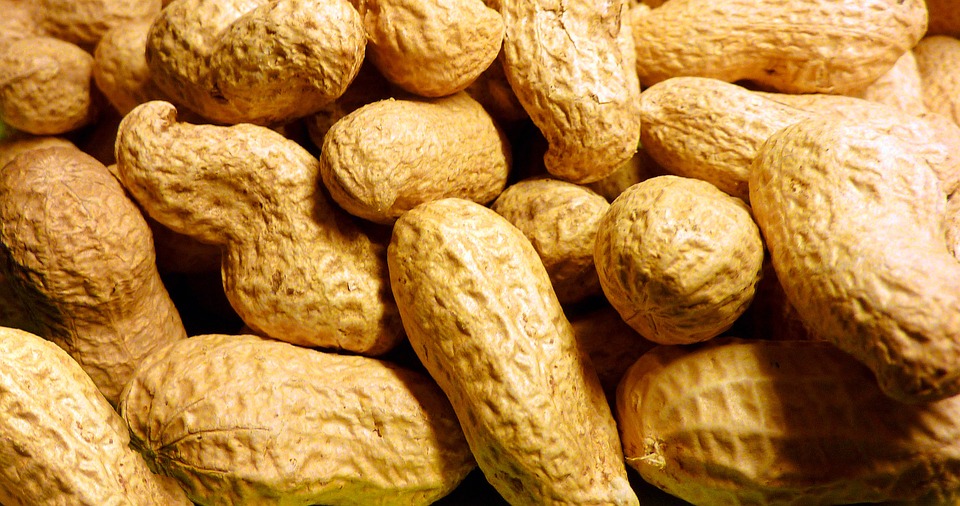
Peanut gallery. Quite honestly, I had no negative connotations when I heard the term ‘peanut gallery’ used. I always thought of Charles Schulz’s cartoon figures in the comic strip Peanuts. I was wrong. The term usually refers to the cheapest seats in a theater. It can also describe critics or hecklers, in general something negative. ‘No comments from the peanut gallery!’ implies that a certain group of commentators is rowdy. History shows us that the term dates back to the vaudeville era of the late 19th century. It refers to the sections of the theater where Black people typically sat.
Cakewalk. If something is ‘cakewalk’ it means something was an easy victory or easily accomplished. Historically it was a dance performed by enslaved Black people on plantations before the Civil War. It was intended as mockery of the way White people danced. Ironically plantation owners often interpreted slaves’ movements as unskillful attempts to be like them. Slave owners held contests where the enslaved people competed for a cake. The dance and idiom was popularized through minstrel shows. It was a high-leg prance with a backward tilt of the head, shoulders and upper torso.
Lynch mob. Nowadays it is used as an umbrella term for an ‘unjust attack’ or ‘undue punishment’. Lynch mobs were usually Whites who’d torture and kill Black people, often by hanging them as a form of vigilante justice. President Donald Trump called his first impeachment inquiry a ‘lynching’. Lynchings are defined as hangings that inflict terror and are usually racially motivated.
Uppity. The Jim Crow period started during the surfacing of segregation laws around 1870 until the 1960s. Is a description used by White people in the Jim Crow period to describe Black people they believed weren’t showing them enough deference. Much more malevolent than the synonym ‘arrogant’. Today the word ‘uppity’ is a way to describe anyone who thinks they are better than what they are. This insult was used throughout the 44th president’s two terms (Obama), usually by conservatives who claimed they were unaware of the word’s racist origins.
Blackball, black mark. Both terms imply wrongdoing. To be banned from joining an organization because of something you’ve done. The phrases didn’t originate in times of slavery, but like blacklist and whitelist the connotations are there that black is evil and disgrace, while white is decency and purity.
Spade. Call a spade a spade. Not just a card. It’s been used forever, at least as far back as A.D. 120. The racist connation started around 1920s. ‘spade’ started being used as a slang term, derogatory slur for a black person.
I’m sure there are many other words and terminologies that could be added to this list, but you get the idea.
Switzerland
And, just so you know, this doesn’t only happen in English. Swiss German has their own list of words that connote racism. An example is the word ‘Mohren’ which is a term that stereotypes people with dark colored skin. They are often depicted with thick lips, curly hair and large earrings. Specifically a Moor is a black Islamic person, from Morocco, who occupied parts of Spain for nearly a thousand years. I believe since the 1960s, depending on whom you ask, it has been deemed racist.
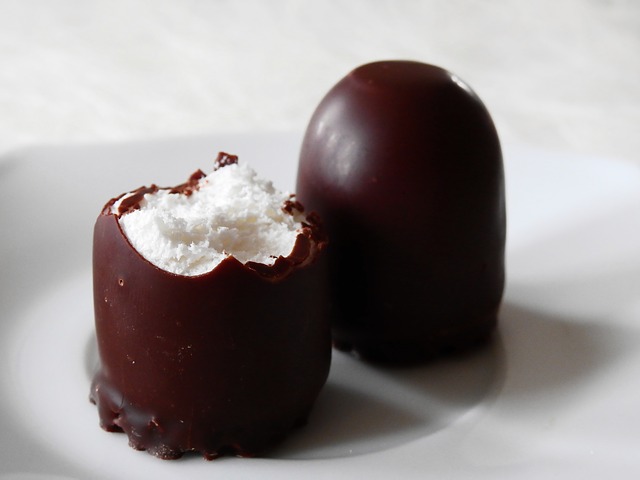
You can find the word used in emblems and historical names with positive connotations. It’s also part of a name for a sweet treat and it is debatable if it’s racist or not. The treat is made of a very sweet, white, foamy marshmallow-like filling covered in chocolate and called ‘Mohrenkopf’ [head of a Moor]. The largest grocery chain, Migros, took a stand on the matter in June 2020 and no longer sells them. Well, actually they still sell them, just under a different name. Migros now calls them ‘Schaumkuss’ [foam kiss]. Which begs the question (to paraphrase William Shakespeare’s play Romeo and Juliet) would a ‘Mohrenkopf’ by any other name still taste as sweet?
Of course it does. This isn’t about being faultless, it’s about being accountable when others object. Remember, words matter.
 -
- -
-